Het wereldwijde magazine en verkoopplatform voor liefhebbers van klassieke auto’s, door liefhebbers.
Het wereldwijde magazine en verkoopplatform voor liefhebbers van klassieke auto’s, door liefhebbers.





De marktplaats: alle oldtimers te koop
Overzicht van gerelateerde advertenties 1973 Triumph TR6 LHD
-

1972 Citroën SM | Historics Auctioneers
In 1961, Citroën began work on 'Project S', a sports variant of the revolutionary Citroën DS. As was customary for the firm, many running concept vehicles were developed, increasingly complex and upmarket from the DS. Citroën purchased Maserati in 1968 with the intention of harnessing Maserati's high-performance V6 engine technology to produce a tr.. -
1970 Triumph TR6 | Historics Auctioneers
The Triumph TR6 was manufactured for seven years from 1969 and by the time production came to an end in July 1976, it was the best-seller of the TR range. The bodywork closely resembled that of the previous model, the Triumph TR5, however the front and rear were squared off and all TR6s featured inline six-cylinder engines. For the US market, th.. -
1971 Jaguar E-Type Series III 2+2 Coupé | Historics Auctioneers
By the mid-1960s, the Jaguar E-Type was appealing to the man with a young family but who were restricted by the size of the current Jaguar E-Type Coupé and its open topped sibling. This prompted Jaguar to offer a third option in the form of a 2+2 Coupé. By adding nine inches to the wheelbase and two inches in height, it was then possible to fit a r.. -
1971 Ford Capri Mk. I 3000E | Historics Auctioneers
Inspired by the success of the Mustang ‘Pony Car’ in the USA, Ford introduced a new model in 1968 for the European market, the Capri, ‘the car you’ve always promised yourself’. The Capri’s imaginative fastback styling was a relatively new departure for Ford, but beneath the lovely body design it remained typically Ford, sharing engines, gearboxes a.. -
1970 Mercedes-Benz 280 SL Pagoda | Historics Auctioneers
The Mercedes-Benz 280 SL was introduced in December 1967 and continued in production till February 1971. The 280 SL had a powerful 2.8 litre inline six-cylinder engine, the bonnet, boot lid, door skins and tonneau cover were made of aluminium to reduce weight. The comparatively short and wide chassis, combined with an excellent suspension, powerful.. -
1973 Jaguar E-Type Series III Roadster | Historics Auctioneers
By the mid-1960s, the Jaguar E-Type was appealing to the man with a young family but who were restricted by the size of the current Jaguar E-Type coupé and its open topped sibling. This prompted Jaguar to offer a third option in the form of a 2+2 coupé. By adding nine inches to the wheelbase and two inches in height, it was then possible to fit a r.. -
MG B SPIDER MKIII RUBBER BUMPER 1979
CAR DESCRIPTIONMG C English green spider, built in 1968 with white number plates. Very good condition of mechanics, interior. The bodywork has very small defects due to time. The model offered was built in only 4544 units between the years 1967 and '69 in the spider versions. It differs from version B for the powerful in-line 6-cylinder e.. -
1970 MG B Roadster | Available for immediate purchase - Price 12,300 €
A reputedly reliable roadsterAn exceptional pleasure / budget ratioSerial number: GNH5UAI871836GEngine: 1798cc, 4 cylinderTransmission: Manual, 4 speedAvailable for immediate purchase - Price 12,300 € History: It was during the Earl Courts Salon in London .. -
1975 Jensen Interceptor Mk. III | Historics Auctioneers
The Jensen Interceptor was launched in 1966 and the all steel bodyshell broke away from the company's traditional method of construction that used GRP (glass reinforced plastic). Designed by Carrozzeria Touring, the early cars were built by Vignale before production eventually was carried out at the Jensen works in West Bromwich. Power was delivere.. -
1976 Jaguar Series II Coupé (5.3 litre) | Historics Auctioneers
A 9,378 car production run of two-door XJ coupés with a pillarless hardtop body called the XJ-C was built between 1975 and 1978. The car was originally shown at the London Motor Show in October 1973, but it subsequently became clear that it was not ready for production, and the economic troubles unfolding in the western world at that time seemed to..


Uitgelicht
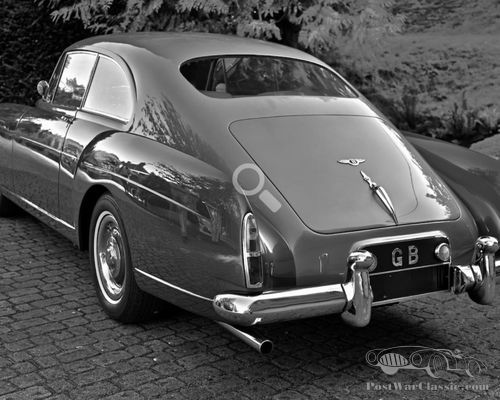
1957 Bentley S1 Fastback by H.J. Mulliner.
1957 Bentley S1 Fastback by H.J. Mulliner.A freshly restored award winning car in like new condition. A later car with Power assited steerin..
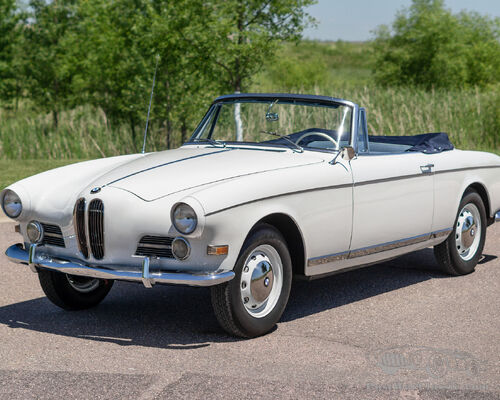
1957 BMW 503 Cabriolet (V8) – 1 van 13 gebouwd voor de Amerikaanse markt – #Matching exemplaar
1957 BMW 503 Cabriolet Serie 1Originele aluminium V8 # MatchingOriginele aluminium carrosserie met fabriekstempels1 v..
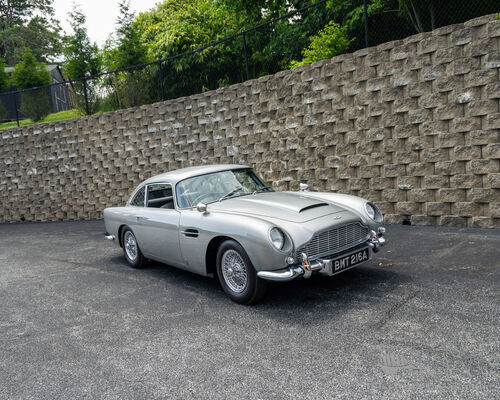
2020 Aston Martin DB5 Goldfinger Continuation | RM Sotheby's | The Monterey Auction
To Be OFFERED AT AUCTION at RM Sothebys' The Monterey Auction event, 13 - 15 August 2026. $1,000,000 - $1,500,000 USD One of 25 examples co..