Het wereldwijde magazine en verkoopplatform voor liefhebbers van klassieke auto’s, door liefhebbers.
Het wereldwijde magazine en verkoopplatform voor liefhebbers van klassieke auto’s, door liefhebbers.


Maak een keuze
- Auto's
-
Merk >>
-
Bouwjaar >>
-
-
Categorie >>
- Motorfietsen
-
Bouwjaar >>
-
- Onderdelen
-
Automerk >>
-
Fabrikant >>
-
Categorie >>
-
Landen



De marktplaats: alle oldtimers te koop
Overzicht van gerelateerde advertenties 1946 Jaguar SS100 3.5 Litre Rebody from 1946 Jaguar 2.5 Litre Saloon.
-

1947 Lea Francis 14 hp open 2-seat sports
Very much a drivers car, with good performance and happy in modern traffic.Older restoration.Super, full history.Full weather equipment, in need of some attention.Twin-cam 1800cc engine.Very much the sports car of its day.1947Lea Francis14 hp open 2-seat sportsVERKOCHTLocatie: Verenigd Koningkrijk -
1967 Jaguar E-type series 1.5 4.2 Fixed Head Coupe
A very nice, sound example now converted to right-hand drive.In primrose and black leather.Older restoration, matching numbers, nicely mellowed.Triple SU engine, 4.2 litres.Nice history file.New floors fitted.Drives well.1967JaguarE-type series 1.5 4.2 Fixed Head CoupeVERKOCHTLocatie: Verenigd Koningkrijk -
1990 Jaguar XJS Convertible | Ascot Racecourse | Historics Auctioneers | 25th September 2021
In 1975, the Jaguar E-Type finally gave way to an all new and more efficient Jaguar, the Jaguar XJS. This new luxury grand tourer, although never quite having the same sporting image as the E-Type, was actually more aerodynamic with the final example leaving the production line on 4th April 1996; at that stage 115,413 units had been manufactured du..1990JaguarXJS ConvertibleVERKOCHT -
1988 Jaguar XJS Coupé (5.3 litre) | Ascot Racecourse | Historics Auctioneers | 25th September 2021
The Jaguar XJS was a luxury grand tourer produced from 1975 through to 1996 and replaced the E-Type. Although it never had quite the same sporting image, the XJS was actually more aerodynamic with the last one being produced on 4th April 1996; at that stage 115,413 had been produced during a 21 year production life. Originally, power came from the ..1988JaguarXJS Coupé (5.3 litre)VERKOCHT -
1958 Jaguar XK150 Drophead Coupé | Ascot Racecourse | Historics Auctioneers | 25th September 2021
Although having a family resemblance to the XK120 and XK140, the XK150 was radically modernised. A one piece windscreen replaced the split screen and the wing line no longer dropped as much over the doors. The bonnet was also widened, opened down to the wings and on the roadster, the bulkhead was moved back four inches to make the bonnet longer. In..1958JaguarXK150 Drophead CoupéVERKOCHT -
1973 Jaguar E-Type Series III 2+2 | Ascot Racecourse | Historics Auctioneers | 25th September 2021
There is no denying the legendary status that is enjoyed by the Jaguar E-Type, from its arrival on the motoring scene in 1961 until the final car was built in 1975, this sports car from Coventry had an impact that is still felt today. Even with its sportscar heritage, Jaguar depended on saloon vehicles for its survival and had developed its twelve-..1973JaguarE-Type Series III 2+2VERKOCHT -
1962 Jaguar E-Type Series I Coupé ‘Flat Floor’ (3.8 Litre) | Ascot Racecourse | Historics Auctioneers | 25th September 2021
Launched at the 1961 Geneva Motor Show, the Jaguar E-Type was nothing short of a revelation. With its heady blend of supercar performance, breath taking styling and low price tag, the newcomer left rivals reeling and customers clamouring, whilst early sportscar racing success at the hands of Graham Hill and Roy Salvadori amongst others helped cemen..1962JaguarE-Type Series I Coupé ‘Flat Floor’ (3.8 Litre)VERKOCHT -
1956 Jaguar Mk. I | Ascot Racecourse | Historics Auctioneers | 25th September 2021
Launched in 1955, the Mk. I extended Jaguar's domination of the high-performance car market in Britain, slotting neatly into the Coventry firm's range alongside the big Mk. VII M saloon and the XK140 sports car. The medium size newcomer broke new ground for Jaguar, being its first model to employ unitary construction of the chassis/body. Jaguar's e..1956JaguarMk. IVERKOCHT -
1995 Jaguar XJS Celebration | Ascot Racecourse | Historics Auctioneers | 25th September 2021
The Jaguar XJ-S is a luxury grand tourer produced from 1975 to 1996 and replaced the E-Type. Although it never had quite the same sporting image, the XJS was a competent replacement with better aerodynamics than the E-Type and was last produced on 4th April, 1996 by which time 115,413 had been produced during a 21-year production life. The car was ..1995JaguarXJS CelebrationVERKOCHT -
1993 Jaguar XJS Convertible | Ascot Racecourse | Historics Auctioneers | 25th September 2021
The Jaguar XJS is a luxury grand tourer produced from 1975 to 1996 and replaced the E-Type. The XJS was a competent replacement with better aerodynamics than the E-Type and was last produced on 4th April, 1996 by which time 115,413 had been produced during a 21 year production life. The car was re-engineered in May 1991 and renamed XJS (facelift). ..1993JaguarXJS ConvertibleVERKOCHT


Uitgelicht
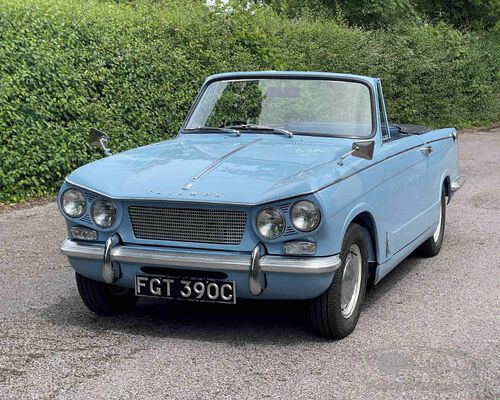
Triumph Vitesse 6 Convertible
Technische specificatiesMerk & model: Triumph Vitesse 6 ConvertibleBouwjaar: 1965Kenteken: Britse registratie
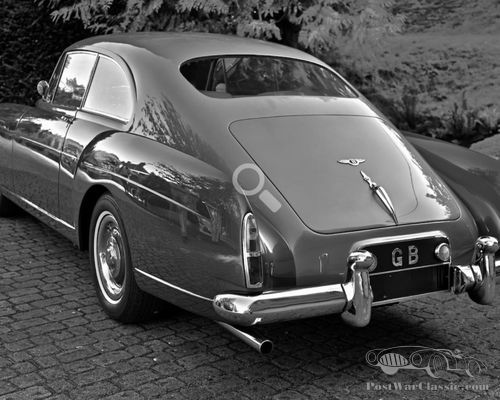
1957 Bentley S1 Fastback door H.J. Mulliner.
1957 Bentley S1 Fastback by H.J. Mulliner.Recent volledig gerestaureerd en bekroond exemplaar, in een staat die vrijwel gelijk is aan nieuw...
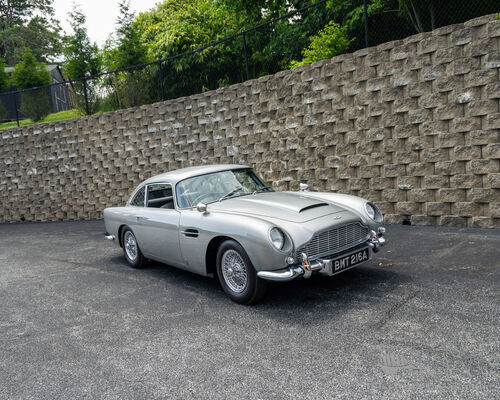
2020 Aston Martin DB5 Goldfinger Continuation
Wordt geveild door RM Sotheby's tijdens The Monterey Auction, 13–15 augustus 2026. Geschatte opbrengst: USD 1.000.000 – 1.500.000..