Het wereldwijde magazine en verkoopplatform voor liefhebbers van klassieke auto’s, door liefhebbers.
Het wereldwijde magazine en verkoopplatform voor liefhebbers van klassieke auto’s, door liefhebbers.


Maak een keuze
- Auto's
-
Merk >>
-
Bouwjaar >>
-
-
Categorie >>
- Motorfietsen
-
Bouwjaar >>
-
- Onderdelen
-
Automerk >>
-
Fabrikant >>
-
Categorie >>
-
Landen



De marktplaats: alle oldtimers te koop
Overzicht van gerelateerde advertenties 1946 Jaguar SS100 3.5 Litre Rebody from 1946 Jaguar 2.5 Litre Saloon.
-

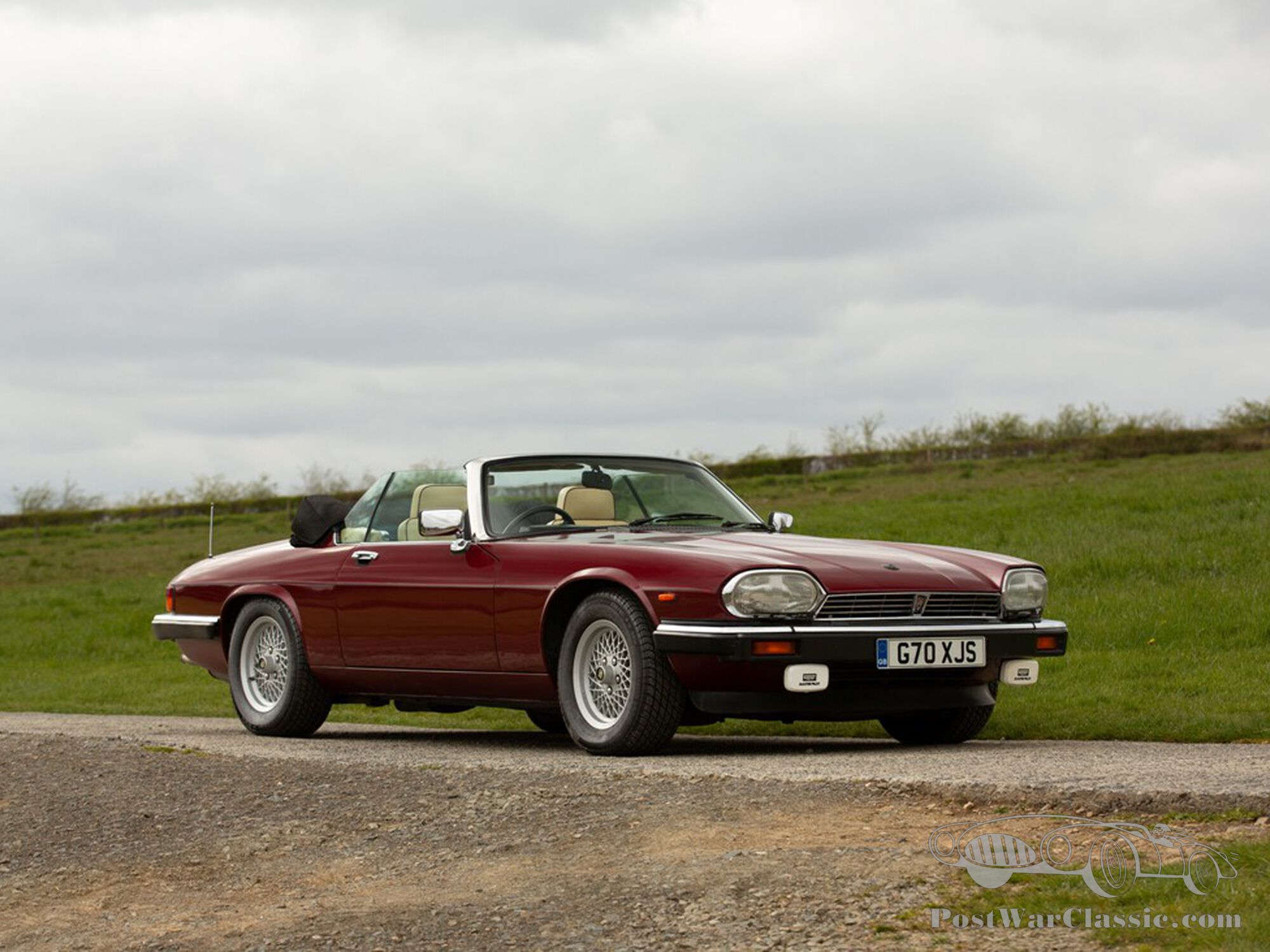
1990 Jaguar XJS Convertible | Historics Auctioneers
The XJS convertible, which first appeared in 1988 at a price of £36,000, was considerably more than merely a coupé with the roof removed. The earlier 'T-top' Cabriolet paved the way as the first open Jaguar since the departure of the E-Type in 1975, but this was to be the first full convertible and a strengthened sub-frame was employed in order to ..1990JaguarXJS ConvertibleVERKOCHT -
1961 Jaguar E-Type Series I Roadster 'Flat Floor' | Historics Auctioneers
Introduced in 3.8-litre form in May 1961, the Jaguar E-Type caused a major sensation when it appeared, with instantly classic lines and 150mph top speed. While, inevitably, the car's stupendous straight-line performance and gorgeous looks grabbed the headlines, there was a lot more to the E-Type beneath the skin. The design owed much to that of the..1961JaguarE-Type Series I Roadster 'Flat Floor'VERKOCHT -
1949 Bristol 400 Coupé | Historics Auctioneers
Bristol motor cars occupy a soft spot in every enthusiast’s heart, the methods of construction taken directly from aircraft production, the superlative triple carb engine combined with sumptuous refinement to the interior all made for a true classic. The 400 was the first real Bristol motorcar. After World War II. Keen collectors will note that Bri..1949Bristol400 CoupéVERKOCHT -
2006 Jaguar XK8 Coupé | Historics Auctioneers
Jaguar cars today are designed in Jaguar Land Rover's engineering centres at the Whitley plant in Coventry and Gaydon in Warwickshire, whilst manufacturing takes place in Jaguar's Castle Bromwich assembly plant in Birmingham. The Jaguar XK series was introduced at the Geneva Motor Show on 5th March 1996; the first generation of the series being the..2006JaguarXK8 CoupéVERKOCHT -
1961 Jaguar Mk. II 2.4 Litre | Historics Auctioneers
Synonymous with the swinging ‘60’s and the hit TV series, Inspector Morse, the Jaguar Mk. II saloon has been used as a vehicle to transport everyone from dignitaries and politicians to bank robbers and the criminal select. Desirable due to being a well-balanced saloon car with space for four adults and a good size boot, it also boasted engine optio..1961JaguarMk. II 2.4 LitreVERKOCHT -
1968 Jaguar E-Type Series I Roadster (4.2 litre) | Historics Auctioneers
The E-Type design owed much to that of the racing D-Type, a monocoque tub forming the main structure while a tubular spaceframe extended forwards to support the engine. Conceived and developed as an open sportscar, the Jaguar E-Type debuted at the Geneva Motor Show in March 1961 in Coupé form. The car caused a sensation, spontaneous applause breaki..1968JaguarE-Type Series I Roadster (4.2 litre)VERKOCHT -
1990 Jaguar XJS Convertible (5.3 Litre) | Historics Auctioneers
In 1975, the Jaguar E-Type finally gave way to an all new and more efficient Jaguar, the Jaguar XJS. This new luxury grand tourer, although never quite having the same sporting image as the E-Type, was actually more aerodynamic with the final example leaving the production line on 4th April 1996. At that stage, 115,413 units had been manufactured d..1990JaguarXJS Convertible (5.3 Litre)VERKOCHT -
1959 Jaguar XK150 “S” DHC
Price: € 135.000,–Mileage: 15 milesConstruction year: 1959Number produced: 87Motor: 6 cylinderEngine power: 250 BhpMotor number: VS-1791-9Engine content: 3400 ccTransmission: 4 gears +overdriveChassis: ConvertibleExterior color: Bordeaux redInterior color: Cream leather..1959JaguarXK150 SVERKOCHTLocatie: Nederland -
1970 Jaguar Type-E 4.2 Liter (Series 2) | Automobiles de Collection | Cornette de Saint Cyr | 26 Apr 2021
Roadster body, 2 placesFront engine, 6 cylinders in line Displacement 4,235 cm3 Horsepower 269 hp Maximum speed 240 km / h Mileage 62,396 km Serial number 1R12556 (engine no.8L61404) When the E-Type was unveiled at the Geneva Motor Show in March 1961, spontaneous applause er..1970JaguarE S2VERKOCHTLocatie: België -
1948 Jaguar 2.5 Ltr | Automobiles de Collection | Cornette de Saint Cyr | 26 Apr 2021
2-door convertible body, 4 places Front engine, 6 cylinders in line Displacement 2,663 cm3 Horsepower 105 hp Maximum speed 140 km / h Odometer 37,455 km Serial number C1498 The immediate post-war Jaguar lineup was nothi..1948JaguarMK IVVERKOCHTLocatie: België


Uitgelicht
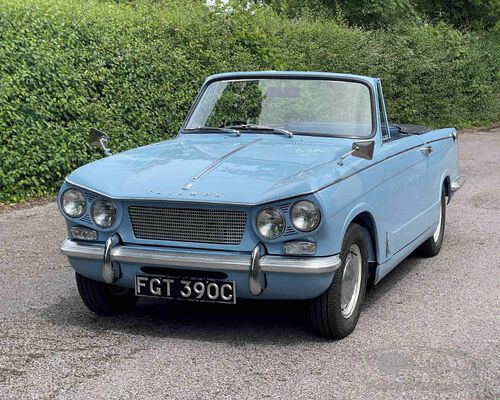
Triumph Vitesse 6 Convertible
Technische specificatiesMerk & model: Triumph Vitesse 6 ConvertibleBouwjaar: 1965Kenteken: Britse registratie
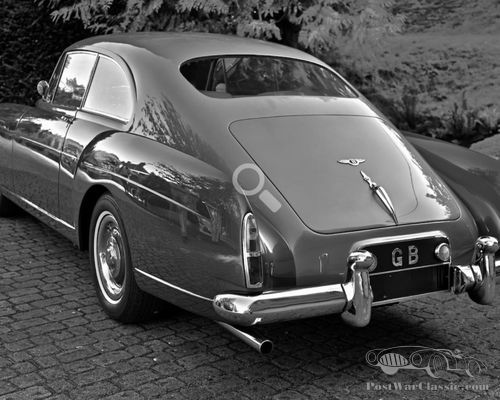
1957 Bentley S1 Fastback door H.J. Mulliner.
1957 Bentley S1 Fastback by H.J. Mulliner.Recent volledig gerestaureerd en bekroond exemplaar, in een staat die vrijwel gelijk is aan nieuw...
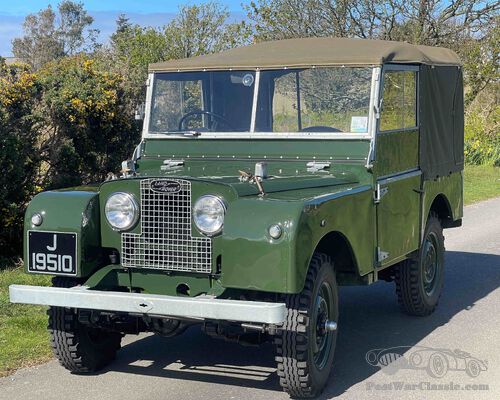
1952 Land Rover Series 1
Technische specificaties:Merk en model: Land Rover Series !Bouwjaar: 1952Kenteken: geregistreerd in ..