Het wereldwijde magazine en verkoopplatform voor liefhebbers van klassieke auto’s, door liefhebbers.
Het wereldwijde magazine en verkoopplatform voor liefhebbers van klassieke auto’s, door liefhebbers.





De marktplaats: alle oldtimers te koop
Overzicht van gerelateerde advertenties 1953 Lancia Aurelia B22
-

1957 Land Rover Series I 109 Pick-Up | Historic Auctioneers | Farnborough International | 11th May 2024
Inspired by the US Army's wartime 'Jeep', developed in haste and intended for short-term, small-scale production, the Land Rover would defy its creators' initial scepticism. Rover bosses the Wilks brothers saw the need for a tough, four-wheel-drive, utility vehicle to serve the needs of the agricultural community in the immediate post-war years, bu.. -
1973 Lancia Fulvia Zagato | Historic Auctioneers | Farnborough International | 11th May 2024
It is fair to say that Lancia is best known for its motorsport prowess, both on the circuit from the LC2 Group C cars all the way through to the rally stages of Europe starring the 037, Stratos and Delta Integrales. Going back a bit though, the Fulvia was the headline act and the independent suspension, all-round disc brakes and narrow angled, V4 e.. -
1959 GMC 370 ‘Flatbed’ | Historic Auctioneers | Farnborough International | 11th May 2024
The Chevrolet Task Force was Chevrolet's successor to the Advance Design series. The Task Force series ran from late 1955 (second series) through 1959. At GMC dealers, it was called the Blue Chip series. The 1955 second series offered standard options and add-ons such as 12-volt electrical systems, Chevrolet’s first V8 engine since 1915 (265 cubic .. -
1957 Land Rover Series I 107 Pick-Up | Historic Auctioneers | Farnborough International | 11th May 2024
Built between 1949 and 1958, the Series I Land Rover was available in no fewer than five different wheelbase lengths ranging from 80 to 109. The original 1.6-litre petrol engine was soon superseded by a 2.0-litre unit (for 1952) and the company set about developing its own diesel, which was first offered in 1956. Ruggedly built and simple in constr.. -
1957 Land Rover Series I SWB | Historic Auctioneers | Farnborough International | 11th May 2024
In the aftermath of the Second World War, Rover's chief engineer Maurice Wilks used a ‘demobbed' Willys Jeep around his farm in Anglesey and was impressed with its abilities. Eventually, it wore out and he was keen to replace it with a British vehicle, however, nothing remotely similar was available. Coincidentally, his brother Spencer, who was Man.. -
1958 Mercedes-Benz 190 SL | Historic Auctioneers | Farnborough International | 11th May 2024
Together with the 300 SL, the Mercedes-Benz 190 SL made history at the New York International Motor Sports Show in February 1954 by being the first new production Mercedes-Benz to be unveiled outside of Germany. The striking impression given by the 190 SL, sitting alongside the bigger 300 SL, was neat, sporty and with dashing lines - signatures of .. -
1956 Bentley S1 | Historic Auctioneers | Farnborough International | 11th May 2024
Successor to the R-Type, the Bentley S1 was introduced in 1955 with a whole new chassis; the car's wheelbase had been extended 3 to 123, and the luggage compartment was expanded. The S1 had softer suspension than the R-Type, with electrically controlled rear shock absorbers. Brakes had been improved, and the steering was lighter. This model marked .. -
1950 Jaguar XK120 Roadster | Historic Auctioneers | Farnborough International | 11th May 2024
The Jaguar XK120 was manufactured between 1948 and 1954 and was Jaguar's first post-war sports car succeeding the SS100 which ceased production in 1940. It was launched in roadster form at the 1948 London Motor Show as a test bed and show car for the new Jaguar XK engine and caused a sensation, persuading William Lyons to put it into production. Th.. -
1953 Ford F100 Pick-Up | Historic Auctioneers | Farnborough International | 11th May 2024
The F-Series is a range of full size pick-up trucks from Ford which have been sold continuously for over six decades. The second generation F-series was introduced in 1953. The F1 became the F100 because of the popular culture influence of the North American F100 Super Sabre, the first supersonic fighter which first flew 1953. Increased dimensions,.. -
1976 Lancia Fulvia 1.3S | Historic Auctioneers | Farnborough International | 11th May 2024
The Lancia Fulvia was introduced at the Geneva Motor Show in 1963 with production running all the way through to 1976. Fulvia’s are notable for their role in motor racing history, including winning the International Rally Championship in 1972. On testing it in 1967, Road and Track summed up the Fulvia as ‘a precision motorcar, an engineering tour d..


Uitgelicht
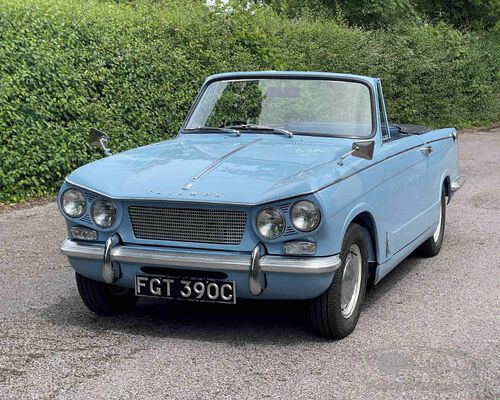
Triumph Vitesse 6 Convertible
Technische specificatiesMerk & model: Triumph Vitesse 6 ConvertibleBouwjaar: 1965Kenteken: Britse registratie
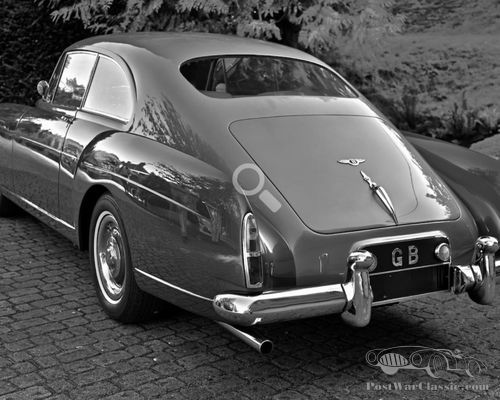
1957 Bentley S1 Fastback door H.J. Mulliner.
1957 Bentley S1 Fastback by H.J. Mulliner.Recent volledig gerestaureerd en bekroond exemplaar, in een staat die vrijwel gelijk is aan nieuw...
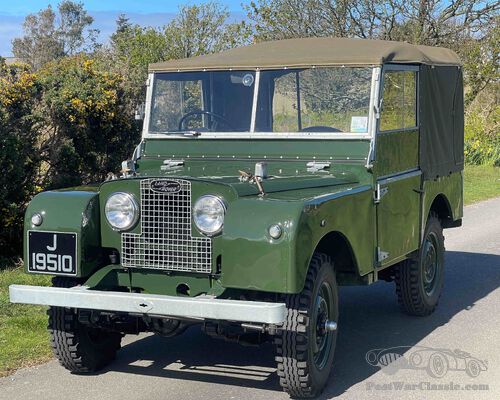
1952 Land Rover Series 1
Technische specificaties:Merk en model: Land Rover Series !Bouwjaar: 1952Kenteken: geregistreerd in ..