Het wereldwijde magazine en verkoopplatform voor liefhebbers van klassieke auto’s, door liefhebbers.
Het wereldwijde magazine en verkoopplatform voor liefhebbers van klassieke auto’s, door liefhebbers.





De marktplaats: alle oldtimers te koop
Overzicht van gerelateerde advertenties 1998 Rolls Royce Silver Seraph
-

2002 BMW Z8 | The Amelia Auction 2024 | Broad Arrow Auctions
Chassis No. WBAEJ13462AH61832 Revealed to the world as the Z07 concept at the 1997 Tokyo motor show, BMW's endeavor to revive the timeless 507 of the 1950s was arguably the most successful example of the "retro-futurism" aesthetic that would captivate the automotive design industry at the turn of the 21st century. The flamboyant and vintage .. -
1984 Mercedes-Benz 300 SD | The Amelia Auction 2024 | Broad Arrow Auctions
Chassis No. WDBCB20A8EA089828 After introducing one of the world's first diesel-powered production cars in 1936, Mercedes again revalorized the segment by introducing the world's first turbocharged diesel car in 1978 as the "W116" generation 300 SD Turbo Diesel. A few years later, the "W116" was replaced with the newly designed "W126." Both .. -
1984 Mercedes-Benz 300 D | Amelia Island Auction | Gooding & Company | March 1, 2024
The truly venerable Mercedes-Benz W123 Series of 1979–1985 deserves a closer look. Nearly 2.7 million examples of all styles were built and have won respect the world over as some of the most reliable vehicles ever made. Sold as utilitarian transportation, they were equally at home as mid-size luxury cars, and a highly successful chapter in the .. -
1992 Porsche 964 Turbo 3.3 X33 Package | Amelia Island Auction | Gooding & Company | March 1, 2024
Arriving for 1989, the 964 generation of the 911 incorporated the most substantial changes yet in the model’s 25-year existence. Porsche claimed the car was 87% new, and while that statement raised eyebrows initially, close examination confirms just how much re-engineering Porsche did. The chassis was substantially revised to incorporate MacPher.. -
2012 Lexus LFA | Amelia Island Auction | Gooding & Company | March 1, 2024
Toyota’s first supercar, the Lexus LFA, was the product of almost a decade of development and engineering. Coinciding with Toyota’s return to Formula 1 in the early 2000s, the initial concept was shown at the 2005 Detroit Auto Show, with prototypes seen testing at racetracks soon after. Hand built by a dedicated production team at Toyota’s Motom.. -
2005 Ferrari 612 Scaglietti | Amelia Island Auction | Gooding & Company | March 1, 2024
When the Ferrari 612 Scaglietti debuted in 2004, it was the long-awaited successor to the 456 GT and the first 2+2 Ferrari to offer truly comfortable accommodations for four. Designed for a combination of performance and luxury, the 612’s wheelbase grew 14" from the 456, yet, thanks to an all-aluminum space frame, it weighed significantly less t.. -
1986 RUF BTR Slantnose | Amelia Island Auction | Gooding & Company | March 1, 2024
While RUF Automobile GmbH was known for its meticulous Porsche performance tuning, the firm entered an entirely new realm in 1981 when the German government granted the company status as a manufacturer, allowing it to assign unique VIN numbers to the cars they built in-house. The first model to bear a RUF VIN was the turbocharged BTR – the lette.. -
1985 Ferrari 308 GTB Quattrovalvole | Amelia Island Auction | Gooding & Company | March 1, 2024
Designed by Pininfarina’s Leonardo Fioravanti and bodied by Scaglietti, the all-new 308 GTB was Ferrari’s first two-seat, mid-engine V-8 production model. Debuted at the October 1975 Paris Salon, the 308 replaced the V-6 Dino 246 GT/ GTS and, a few years later, the somewhat controversial Bertone-designed 308 GT4 2+2. The earliest examples, built.. -
1994 Porsche 964 Turbo S Flachbau X83 | Amelia Island Auction | Gooding & Company | March 1, 2024
As the manufacture of the Porsche 964 3.6-liter Turbo was winding down towards the end of 1993, there were purportedly 93 Turbo coupes left in factory inventory. In response, Porsche sent these remaining chassis to its Exclusive Department – a specialized division within the company that focused on creating more customized vehicles for VIP custo.. -
1992 Porsche 964 Carrera RS N/GT | Amelia Island Auction | Gooding & Company | March 1, 2024
The iconic Porsche 911 Carrera RS 2.7 from 1973 served as a means to homologate the 911 Carrera RSR 2.8 for FIA Group 4 racing. Similarly, the 964 Carrera RS introduced in 1992 was created to homologate the Carrera RSR 3.8. Approved for global road use except in the US, the new RS was based on the Carrera Cup competition car and made available i..


Uitgelicht
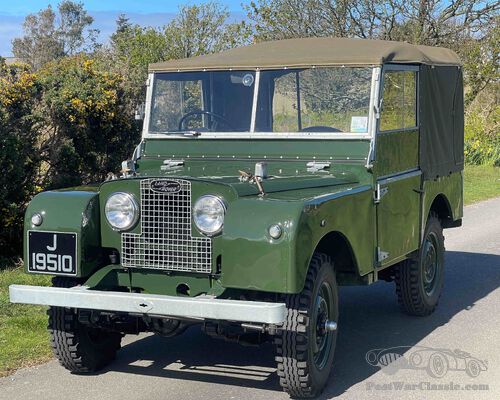
1952 Land Rover Series 1
Technische specificaties:Merk en model: Land Rover Series !Bouwjaar: 1952Kenteken: geregistreerd in ..
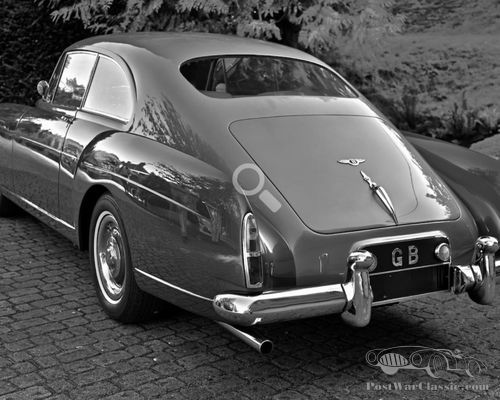
1957 Bentley S1 Fastback door H.J. Mulliner.
1957 Bentley S1 Fastback by H.J. Mulliner.Recent volledig gerestaureerd en bekroond exemplaar, in een staat die vrijwel gelijk is aan nieuw...
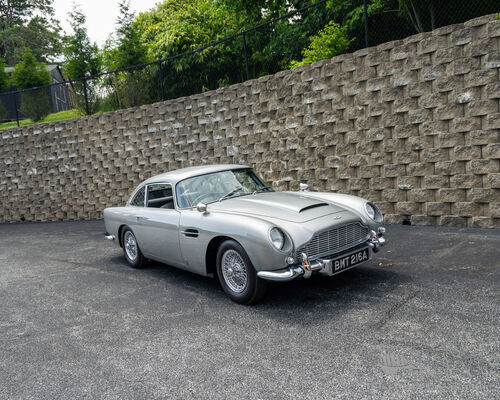
2020 Aston Martin DB5 Goldfinger Continuation
Wordt geveild door RM Sotheby's tijdens The Monterey Auction, 13–15 augustus 2026. Geschatte opbrengst: USD 1.000.000 – 1.500.000..