Het wereldwijde magazine en verkoopplatform voor liefhebbers van klassieke auto’s, door liefhebbers.
Het wereldwijde magazine en verkoopplatform voor liefhebbers van klassieke auto’s, door liefhebbers.





De marktplaats: alle oldtimers te koop
Overzicht van gerelateerde advertenties 2003 Mercedes-Benz C 220 SW
-

1966 Mercedes-Benz 300SE 'Fintail' Sedan
Following the outbreak of the First World War in 1914, Europe’s car industry was decimated. In Germany both Daimler and Benz went back to producing cars post-war, however, times were tough. A merger between Daimler and Benz would ensure that both companies survived and following a technical co-operation agreement in 1924, the companies formally .. -
1970 Mercedes-Benz 280 SL Pagoda | Historics Auctioneers
The Mercedes-Benz 280 SL was introduced in December 1967 and continued in production till February 1971. The 280 SL had a powerful 2.8 litre inline six-cylinder engine, the bonnet, boot lid, door skins and tonneau cover were made of aluminium to reduce weight. The comparatively short and wide chassis, combined with an excellent suspension, powerful.. -
1988 Ferrari Mondial QV GTB (3.2 Litre) | Historics Auctioneers
With a name reminiscent of the 500 Mondial race cars from the 1950s, the Ferrari Mondial was a replacement model for the Ferrari 308 GT4. The Mondial was the first Ferrari where the entire engine, gearbox and rear suspension assembly was mounted on a detachable steel subframe, making engine removal for a major rebuild or cylinder head removal much .. -
Mercedes-Benz 190 SL, 1962
Mercedes-Benz 190 SLYear 1962Chassis number 1210401001809XEngine number 1219211001818XBody number 121040100139XColour blue metallic (colour number 396) combined with a red leather interior and red carpetBlack mohair (Sonnenland) soft-top, red leather hood cover and original hard top in bod.. -
1995 Land Rover Range Rover P38 | LeBolide Auction | Ending February 19, 2021 - 11.30
Two owners only, maintenance followed and documentedDual-fuel, gasoline and LPG engineSerial number: SALLPAMJ4MA306272Engine: 8 cylinder, 4554 cm3Transmission: Classic Automatic, 4 speedLocation: Frascati (Rome), ItalyEstimate: 7,000 - 9,000 euro History: -
2007 Aston Martin Vantage V8 Roadster | LeBolide Auction | Ending February 22, 2021 - 11.30
Hand-sewn in the great British artisan traditionCertified mileage and maintenanceSerial number: fsk548799jkl897Engine: V8, 4300 cm3Transmission, Double clutch robot, 6 speedEstimate: 55,000 - 60,000 euro History:Inherited from the Aston Martin DB9, itself a desce.. -
2016 Fiat 500 695 Biposto Record | Historics Auctioneers
The Fiat 500 is a rear-engined, small city car that was manufactured and marketed from 1957. Some 50 years later, Fiat previewed an all-new three-door hatchback 500 model in March 2007. The design of the 2007 Fiat 500 is based on the 2004 Trepiúno concept car. The new model features distinctive retro styling, following the pattern of the Volkswagen.. -
1988 BMW 635 CSi Highline | Historics Auctioneers
Successor to the race proven E9 3.0CS/CSi, the BMW 6-Series was introduced in August 1976, it utilised a modified version of the 5-Series saloon platform equipped with all-round independent suspension and powerful disc brakes. A natural rival to the 928 and XJS, the four-seater 6-Series proved more capacious than the Porsche and sportier than the J.. -
1988 Jaguar XJRS Le Mans Coupé | Historics Auctioneers
The Jaguar XJS design, codenamed XJ27, started around 1965 with the first production car being sold in 1975. It was primarily designed by Malcolm Sayer with input and control from Sir William Lyons. Although the public assumed the Jaguar XJS was a successor to the very popular E-Type it was in fact intended to be very different. It would be comfort.. -
1997 Rolls-Royce Silver Seraph | Historics Auctioneers
The Geneva Motor Show of 1998 saw the launch of the all new Rolls-Royce Silver Seraph. This new model was hand built at the Rolls-Royce factory in Crewe. It replaced the Silver Spur which ended production in 1997. The car had a base price of £155,175 in the U.K. and was powered by a 5.4 litre, aluminium alloy BMW V12 engine, making it the first twe..


Uitgelicht
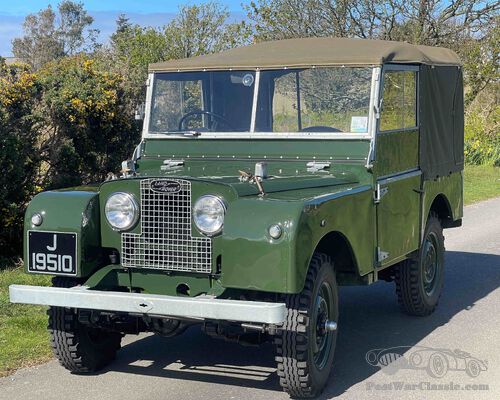
1952 Land Rover Series 1
Technische specificaties:Merk en model: Land Rover Series !Bouwjaar: 1952Kenteken: geregistreerd in ..
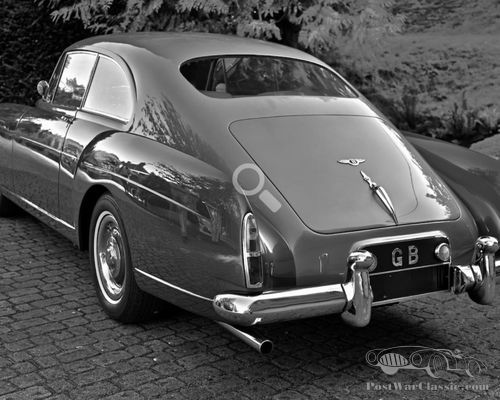
1957 Bentley S1 Fastback door H.J. Mulliner.
1957 Bentley S1 Fastback by H.J. Mulliner.Recent volledig gerestaureerd en bekroond exemplaar, in een staat die vrijwel gelijk is aan nieuw...
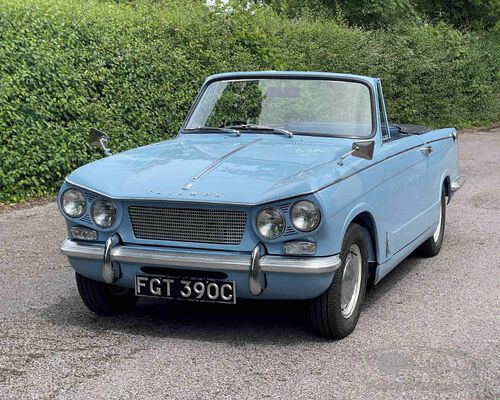
Triumph Vitesse 6 Convertible
Technische specificatiesMerk & model: Triumph Vitesse 6 ConvertibleBouwjaar: 1965Kenteken: Britse registratie