Het wereldwijde magazine en verkoopplatform voor liefhebbers van klassieke auto’s, door liefhebbers.
Het wereldwijde magazine en verkoopplatform voor liefhebbers van klassieke auto’s, door liefhebbers.





De marktplaats: alle oldtimers te koop
Overzicht van gerelateerde advertenties 1961 Jaguar E-Type
-

Alfa Romeo 1300 Giulietta Spider '61
SpecificationsBodyworkLength : cm (in): 340 (133.9)Width : cm (in): 154 (60.6)Height : cm (in): 118 (46.5)Wheelbase : cm (in) : 225 (88.6)Weight: kg (lb) : 840 (1854)Mechanics.Displacement : straight 4 1290 cc (79 ci), front-mountedValve gear : 8Fuel s.. -
Alfa Romeo Giulia 1300ti '67
Rare early Giulia with flat dashboard and Belgian papers.Recently completely checked and all wearing parts renewed.Maintain and road ready.Has proven its reliability and is ready to make a new owner happy.SpecificationsBodyworkLength : cm (in): 416 (164)Width : cm (in).. -
1967 JAGUAR XKE 2+2 COUPE
Jaguar’s revolutionary E-Type set the automotive world on fire when it debuted at the Geneva Auto Salon in 1961. Not only was the car clothed in a stunning body, but it featured cutting-edge technology reserved for the world’s most exclusive sports cars. The E-Type shared much of its specification with the world-beating D-Type, including a twin-.. -
1965 JAGUAR XKE ROADSTER
By 1960, Jaguar’s XK-150 sports car was beginning to show its age, and Jaguar was gearing up to make a big splash with its replacement. The XK series traced its roots back to 1948 with the XK-120, and the time had come for a radical new car that would recapture the magic that Jaguar’s reputation was founded upon. Company boss Sir William Lyons r.. -
1963 JAGUAR MARK II 3.8 SALOON
From its earliest days as S.S. Cars, luxurious and sporty saloon cars have sustained Jaguar through its highs and lows. In the mid-1950s, Jaguar was savoring the accomplishments of the XK sports cars and world-beating C-Type and D-Type sports racers. They even enjoyed surprising success with the massive MkVII and MkIX in British Saloon Car racin.. -
1960 JAGUAR XK150 3.8 FIXED HEAD COUPE
In 1957, Jaguar released the final and most advanced version of the XK-series of sports cars. The XK150 featured the most significant changes made since the XK120 appeared in 1949. The chassis was very similar to the outgoing 140, with independent front suspension, Salisbury rear axle, and rack and pinion steering. New for the 150, however, was .. -
1957 JAGUAR XK140 MC ROADSTER
Following hot on the heels of Jaguar’s sensational XK120, the XK140 debuted in 1955 featuring a number of improvements designed to address customer complaints with the 120. Thankfully, Jaguar was able to retain the arresting good looks of the original design, while allowing for more room and better-balanced handling. The XK140’s larger full-widt.. -
1951 JAGUAR XK120 FIXED HEAD COUPE
Over the years, Jaguar developed quite a knack at unveiling their latest and greatest sports cars to stunned audiences. It happened in the early 1990s with the spectacular XJ220 supercar. Before that, the E-Type set the world alight with its staggeringly beautiful lines and exotic construction. However, it was at the 1948 London Motor Show where.. -
1964 FERRARI 330 GT 2+2 COUPE
Ferrari’s handsome and understated four-seat 250 GTE has only recently caught the attention and respect of collectors, despite it quietly being one of the most important cars in Ferrari’s history. Not only was it one of Maranello’s first commercially successful products, but it also marked the turning point for the company from boutique manufact.. -
1962 AUSTIN HEALEY 3000 MK II ROADSTER
When Donald Healey built the very first “Healey Hundred” prototype in 1952, he was taking a significant risk. The fate of the Donald Healey Motor Company was riding on Donald’s ability to impress Leonard Lord, the head of the newly formed British Motor Corporation, enough to allow the use of Austin’s A90 running gear for production. Healey’s rel..


Uitgelicht
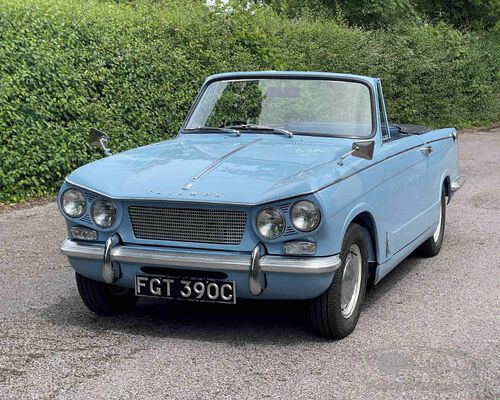
Triumph Vitesse 6 Convertible
Technische specificatiesMerk & model: Triumph Vitesse 6 ConvertibleBouwjaar: 1965Kenteken: Britse registratie
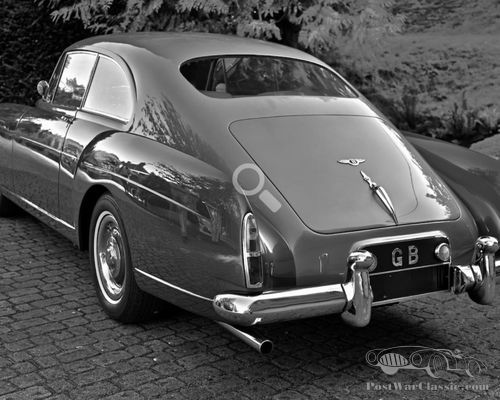
1957 Bentley S1 Fastback door H.J. Mulliner.
1957 Bentley S1 Fastback by H.J. Mulliner.Recent volledig gerestaureerd en bekroond exemplaar, in een staat die vrijwel gelijk is aan nieuw...
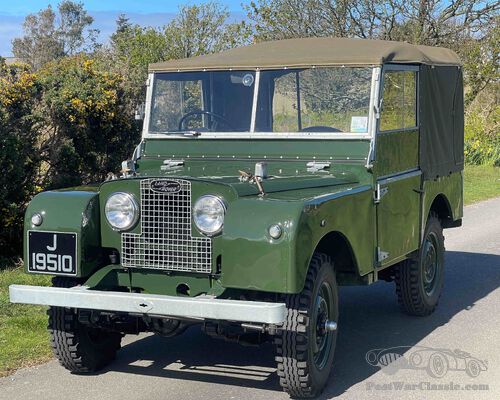
1952 Land Rover Series 1
Technische specificaties:Merk en model: Land Rover Series !Bouwjaar: 1952Kenteken: geregistreerd in ..