Het wereldwijde magazine en verkoopplatform voor liefhebbers van klassieke auto’s, door liefhebbers.
Het wereldwijde magazine en verkoopplatform voor liefhebbers van klassieke auto’s, door liefhebbers.





De marktplaats: alle oldtimers te koop
Overzicht van gerelateerde advertenties Mini 850
-

1973 Fiat 124 Spider | Windsor View Lakes Sale - July 2023 | Historics Auctioneers
The 124 Sport Spider was marketed by Fiat between 1966 and 1980 having debuted at the November 1966 Turin Motor Show. Designed and manufactured by Italian Carrozzeria Pininfarina, specifically Sergio Pininfarina, who used the already available designs of the Chevrolet Corvette 'Rondine' and Ferrari 275GTS. The four-cylinder engine used in the spide.. -
1974 Rolls-Royce Corniche | Windsor View Lakes Sale - July 2023 | Historics Auctioneers
The origins of the Corniche came from the continuation of the 1965 Rolls-Royce Silver Shadow Coupé and 1967 Drophead, constructed by the famed coachbuilder Mulliner Park Ward in London. The car was named after the stunning roads along the Côte d’Azur in France and was an elegant two-door car available with either a coupé or convertible body. By 198.. -
1973 Triumph TR6 | Windsor View Lakes Sale - July 2023 | Historics Auctioneers
The TR6 was introduced in 1968 and was the bestseller of the TR range when production ended in July 1976. The bodywork closely resembled that of the previous model, the Triumph TR5. The design house, Karmann Consultants, squared off the front and back ends to give the TR6 its sharpened look. Fitted with a 2.5 litre, in-line, six-cylinder engine, th.. -
1973 Volkswagen Beetle Convertible by Karmann | Windsor View Lakes Sale - July 2023 | Historics Auctioneers
The VW Beetle is a true icon of 20th Century motoring and occupies a significant position in the minds and hearts of drivers and enthusiasts across the globe. The Beetle is the longest-running and most-manufactured car of a single design platform anywhere in the world with over 21 million cars produced between 1938 and 2003. The VW Beetle has seduc.. -
1973 Citroën SM 3.0 Manual | Windsor View Lakes Sale - July 2023 | Historics Auctioneers
In 1961, Citroën began work on 'Project S', a sports variant of the revolutionary Citroën DS. As was customary for the firm, many running concept vehicles were developed, increasingly complex and upmarket from the DS. Citroën purchased Maserati in 1968 with the intention of harnessing Maserati's high-performance V6 engine technology to produce a tr.. -
1971 MG B Roadster | Windsor View Lakes Sale - July 2023 | Historics Auctioneers
The MGB is a classic British sports car manufactured in numbers to cater for the insatiable appetite for open top motoring in the 1960s and 1970s. Built with rugged mechanics and powered by the un-burstable, all-iron BMC B-Series, 1800cc engine, the MGB was of lightweight monocoque construction and incorporated crumple zones designed to protect the.. -
1972 Volkswagen Fibrecraft Storm Beach Buggy | Windsor View Lakes Sale - July 2023 | Historics Auctioneers
Starting with the Meyers Manx, the dune buggy craze took off in America in the early Sixties. Used Volkswagen Beetles were abundant in California and the surf culture was at its peak in the Sixties. The dune buggy epitomised the California lifestyle, and as the concept was so simple and so inviting, it spread quickly. This correctly registered 197.. -
1974 Jensen Interceptor Mk. III | Windsor View Lakes Sale - July 2023 | Historics Auctioneers
The Jensen Interceptor was launched in 1966 and the all steel body shell broke away from the company's traditional method of construction that used GRP (Glass Reinforced Plastic). Designed by Carrozzeria Touring, the early cars were built by Vignale before production eventually was carried out at the Jensen works in West Bromwich. Power was deliver.. -
1970 Jaguar E-Type Series II Roadster | Windsor View Lakes Sale - July 2023 | Historics Auctioneers
There is little doubt that the advent of Jaguar’s E-Type revolutionised the motoring world and sent the press into raptures, the penmanship that created such exquisite lines was truly gifted. The Museum of Modern Art recognised the significance of the Jaguar E-Type's design in 1996 by adding a blue roadster to its permanent design collection, one o.. -
1972 Jensen Interceptor Mk. III | Windsor View Lakes Sale - July 2023 | Historics Auctioneers
The Jensen Interceptor was launched in 1966, utilising an all steel bodyshell, breaking away from the company's traditional method of construction that used GRP (Glass Reinforced Plastic). Designed by Carrozzeria Touring, the early cars were built by Vignale before production eventually was carried out at the Jensen works in West Bromwich. 1971 saw..


Uitgelicht
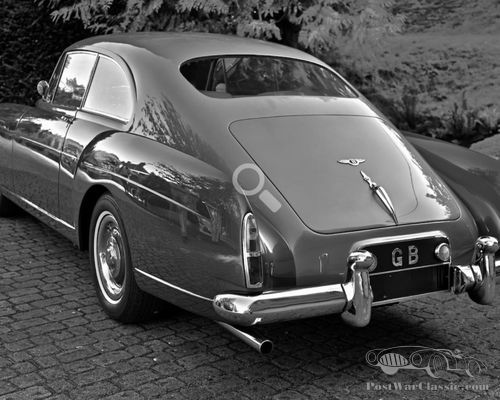
1957 Bentley S1 Fastback door H.J. Mulliner.
1957 Bentley S1 Fastback by H.J. Mulliner.Recent volledig gerestaureerd en bekroond exemplaar, in een staat die vrijwel gelijk is aan nieuw...
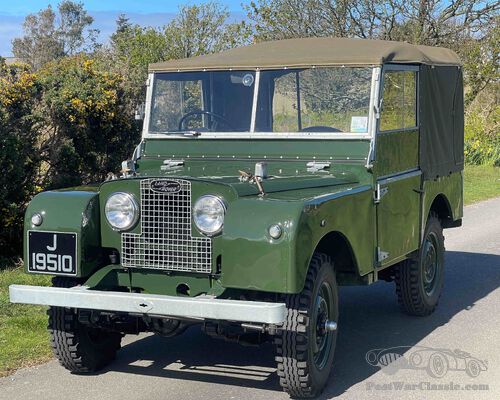
1952 Land Rover Series 1
Technische specificaties:Merk en model: Land Rover Series !Bouwjaar: 1952Kenteken: geregistreerd in ..
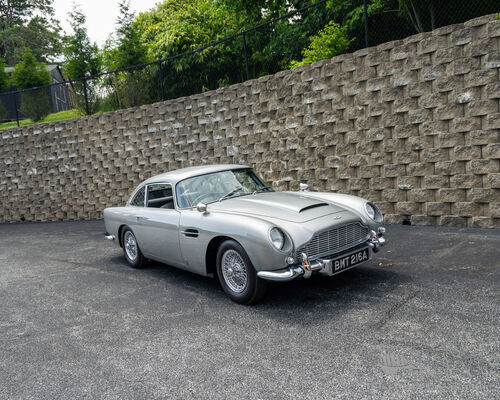
2020 Aston Martin DB5 Goldfinger Continuation
Wordt geveild door RM Sotheby's tijdens The Monterey Auction, 13–15 augustus 2026. Geschatte opbrengst: USD 1.000.000 – 1.500.000..