Het wereldwijde magazine en verkoopplatform voor liefhebbers van klassieke auto’s, door liefhebbers.
Het wereldwijde magazine en verkoopplatform voor liefhebbers van klassieke auto’s, door liefhebbers.





De marktplaats: alle oldtimers te koop
Overzicht van gerelateerde advertenties 1972 Citroen DS 23 PALLAS
-

1957 Citroen 2CV AZ | Selections from the Mullin Collection Auction | Gooding & Company | April 26, 2024
The original Citroën 2CV was an immediate success from introduction in 1948, with availability initially prioritized – at the suggestion of Citroën chief engineer Paul Boulanger – for purchasers who were required to drive for their professions, including country veterinarians, doctors, midwives, priests, and small-scale farmers. Select and welco.. -
1978 Citroen Dyane | Selections from the Mullin Collection Auction | Gooding & Company | April 26, 2024
In response to Renault’s strong-selling 4CV, Citroën launched the Dyane in January 1968. An update of the venerable but dated 2CV, the Dyane was based on the same chassis as the 2CV and shared its independent suspension, which was ingeniously interconnected front to rear. Power was initially delivered by the proven 602 cc engine from the Ami 6, .. -
1969 Citroen DS21 d'Usine Cabriolet | Selections from the Mullin Collection Auction | Gooding & Company | April 26, 2024
Introduced in 1965, the Citroën DS21 was an uprated and upgraded version of the groundbreaking DS19, featuring a larger 2,175 cc engine and an improved interior. As with its predecessor, the DS21 was offered as a sedan (berline) and station wagon (break). Select styling by Robert Opron brought a revised headlamp treatment by 1967. The visually s.. -
1973 Citroen GS Birotor | Selections from the Mullin Collection Auction | Gooding & Company | April 26, 2024
Following the 1969–1971 trial program for the innovative rotary-powered M35, the Citroën GS-based Birotor was powered by, as the name implies, a twin-chamber engine with design rooted in the work of famed German engineer Dr. Felix Wankel and development by NSU. In the case of the GS Birotor, its power unit was supplied by Comotor, a joint ventur.. -
1967 Citroen ID19 | Selections from the Mullin Collection Auction | Gooding & Company | April 26, 2024
A simplified companion model to the DS, Citroën’s ID19 was introduced at the 1956 Paris Salon, one year after the DS made its debut there. Powered by a 1.9-liter engine shared with its “senior” stablemate, albeit slightly detuned, the ID19 also delivered the advantages of front-wheel drive and retained essentially the same body styling as the DS.. -
1968 Citroen Ami 6 Break | Selections from the Mullin Collection Auction | Gooding & Company | April 26, 2024
Added to Citroën’s model lineup in 1961, the Ami 6 combined the rational and economical basic foundation of the 2CV with ultra-modern design by longtime Citroën engineer Flaminio Bertoni, who spearheaded the company’s designs since the prewar Traction Avant. By 1964, the original and ultra-modern Ami 6 Berline (Sedan) was supplemented by the han.. -
1980 Citroen Méhari | Selections from the Mullin Collection Auction | Gooding & Company | April 26, 2024
Named after a swift dromedary camel, Citroën’s Méhari was an elemental and lightweight recreational and utility vehicle, based on the chassis and mechanicals of the 2CV and quite similar in concept to BMC’s Mini-derived Moke. The Méhari was designed by French WWII flying ace Count Roland de la Poype, head of the French company SEAB (Société d'Et.. -
1971 Citroen DS21 Pallas | Selections from the Mullin Collection Auction | Gooding & Company | April 26, 2024
The Citroën DS is undoubtedly one of the most ambitious, influential, and distinctive automobiles ever produced. Introduced for 1956, nearly 1.5 million examples were built through 1973, comprising the DS19, DS21, and DS23. Universally praised by auto magazine road testers and owners, the DS earned consistent accolades throughout production for .. -
2009 Citroen C3 Pluriel 1.4i Charleston | Selections from the Mullin Collection Auction | Gooding & Company | April 26, 2024
Now enjoying its fourth generation in production, Citroën’s C3 “supermini” car replaced the Saxo and entered production in April 2002. Initially a practical five-door hatchback, the design was also marketed as the premium level DS3. The innovative Pluriel debuted in July 2003, adding a unique, multi-configuration convertible to the C3 model line.. -
1964 Citroen Ami 6 Berline | Selections from the Mullin Collection Auction | Gooding & Company | April 26, 2024
Launched in 1961 as “the world’s most comfortable medium class car,” the Citroën Ami 6 was styled by longtime Citroën engineer Flaminio Bertoni, who played leading roles in the design of such legends as the Traction Avant, 2CV, and DS. Featuring ultra-modern styling, the Ami 6 was offered in two main body styles – a berline or notchback sedan an..


Uitgelicht
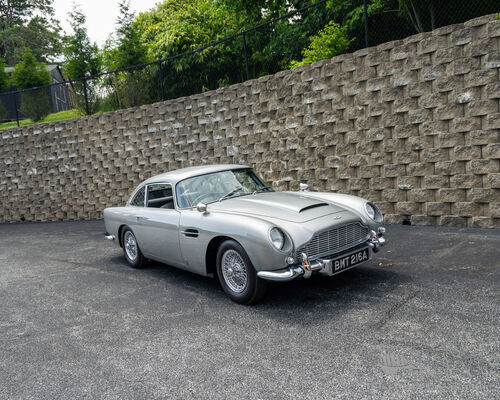
2020 Aston Martin DB5 Goldfinger Continuation | RM Sotheby's | The Monterey Auction
To Be OFFERED AT AUCTION at RM Sothebys' The Monterey Auction event, 13 - 15 August 2026. $1,000,000 - $1,500,000 USD One of 25 examples co..
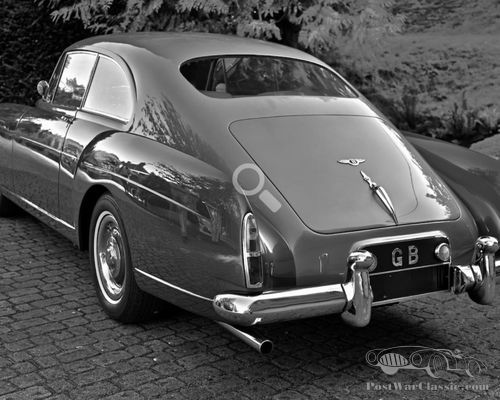
1957 Bentley S1 Fastback by H.J. Mulliner.
1957 Bentley S1 Fastback by H.J. Mulliner.A freshly restored award winning car in like new condition. A later car with Power assited steerin..
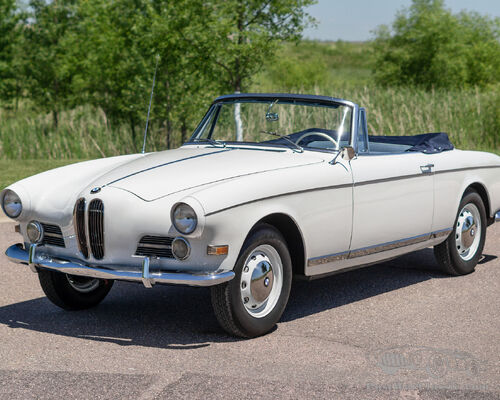
1957 BMW 503 Cabriolet (V8) – 1 van 13 gebouwd voor de Amerikaanse markt – #Matching exemplaar
1957 BMW 503 Cabriolet Serie 1Originele aluminium V8 # MatchingOriginele aluminium carrosserie met fabriekstempels1 v..