Het wereldwijde magazine en verkoopplatform voor liefhebbers van klassieke auto’s, door liefhebbers.
Het wereldwijde magazine en verkoopplatform voor liefhebbers van klassieke auto’s, door liefhebbers.





De marktplaats: alle oldtimers te koop
Overzicht van gerelateerde advertenties 1976 Alfa Romeo Sports Coupé by Autotecnica del Lario | RM Sotheby's | The Woodcote Park Auction
-

1963 Facel Vega II | Historics Auctioneers
Built by one of France’s most famous manufacturers of high-speed grand tourers, the Facel II continued the marque’s tradition of American performance coupled with French styling. Powered by a 355bhp, Chrysler V8, the four-seater Facel II could sprint from 0-60mph in 7.8 seconds and achieve a top speed of 134mph while carrying its passengers in tota.. -
1966 Mercedes-Benz 230 SL Pagoda | Historics Auctioneers
Launched at the Geneva Motor Show in March of 1963, the 230 SL was a very different car to its predecessors. Intended as the replacement for the 190 SL, the 230 SL abandoned the four-cylinder engine in favour of a 2.3 litre fuel-injected six cylinder engine, producing 150bhp. The new engine was derived from that of the great 220 SE. The Paul Bracq .. -
1969 Shelby GT350 Convertible | Historics Auctioneers
The Shelby Mustang is a high-performance variant of the Ford Mustang which was built by Shelby American from 1965 to 1968, and from 1969 to 1970 by Ford. The earliest of cars are often called Cobras using the Cobra emblem and the optional Cobra valve covers on many GT350s that were part of a marketing tie-in by Shelby with the AC Cobra models produ.. -
1963 Ford Lotus Cortina Mk. I | Historics Auctioneers
In 1961, Colin Chapman was commissioned by Harry Mundy to design a twin-cam version of the Ford Kent engine and its first appearance was at the Nürburgring in a Lotus 23 driven by Jim Clark. Soon after, the engine appeared in the Lotus Elan. During the engine's development, Walter Hayes at Ford asked Colin Chapman to fit the twin-cam into 1,000 For.. -
1966 Jaguar S-Type (3.4 litre) | Historics Auctioneers
Produced from 1963 to 1968, the Jaguar S-Type was technically a more sophisticated development of the Jaguar Mk. II, offering buyers a more luxurious alternative. It was available with either 3.4 or 3.8 litre XK engines and featured longer rear bodywork among other styling and interior changes. Despite its extra weight, the S-Type's independent rea.. -
1960 Jaguar Mk. II (3.8 litre) | Historics Auctioneers
Built between 1959 and 1967 the Jaguar Mk. II is a medium sized saloon car constructed in Coventry as the successor to the Jaguar 2.4 litre and 3.4 litre models manufactured between 1957 and 1959. These retrospectively became known as the Jaguar Mk. I following the release of the Mk. II in 1959. Adhering to Sir William Lyons' maxim of ‘grace, pace .. -
1961 Bedford J.O. Pick-Up | Historics Auctioneers
Bedford Vehicles, usually shortened to just Bedford, was produced by Vauxhall Motors which was ultimately owned by General Motors. Established in 1930 and constructing commercial vehicles, Bedford Vehicles was a leading international truck brand, with substantial export sales of light, medium, and heavy trucks throughout the world. It was GM Europe.. -
1967 Lotus Elan S3 Fixedhead Coupé | Historics Auctioneers
Introduced in 1962, the Elan featured a simple but effective steel backbone frame and all-independent wishbone suspension which used a modified Chapman Strut, as developed in Lotus Grand Prix cars, at the rear. Rack and pinion steering was sourced from the Triumph Vitesse and there were Girling disc brakes all round. The Elan's engine was a highly .. -
1968 Sunbeam Stiletto | Historics Auctioneers
The Stiletto is the sporty version of the Imp, the Rootes Group's innovative small car devised to take on the Mini. The new small saloon was launched in 1963 and built at a brand new factory at Linwood, Scotland. It was co-designed by Michael Parkes, a development engineer for Ferrari, and one of its most notable features was the all-aluminium, hig.. -
1967 Rolls-Royce Two-Door Mulliner Park Ward | Historics Auctioneers
Rolls-Royce Motors formed Mulliner Park Ward by the 1961 merger of two Rolls-Royce subsidiaries: Park Ward of Willesden, London, a Rolls-Royce subsidiary since 1939 and H. J. Mulliner& Co. of Chiswick, a Rolls-Royce subsidiary since 1959. Mulliner Park Ward continues to operate as the vehicle customization division of Bentley Motors Limited, th..


Uitgelicht
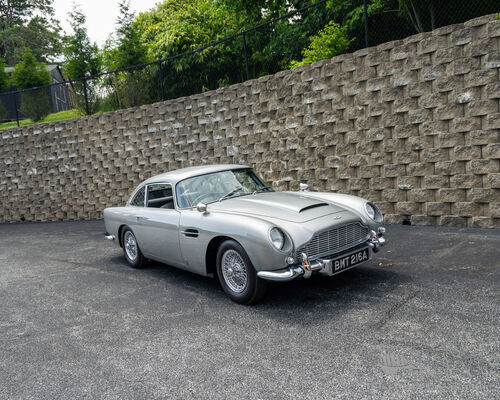
2020 Aston Martin DB5 Goldfinger Continuation | RM Sotheby's | The Monterey Auction
To Be OFFERED AT AUCTION at RM Sothebys' The Monterey Auction event, 13 - 15 August 2026. $1,000,000 - $1,500,000 USD One of 25 examples co..
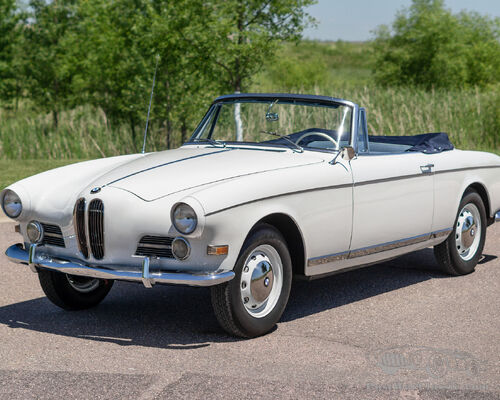
1957 BMW 503 Cabriolet (V8) – 1 van 13 gebouwd voor de Amerikaanse markt – #Matching exemplaar
1957 BMW 503 Cabriolet Serie 1Originele aluminium V8 # MatchingOriginele aluminium carrosserie met fabriekstempels1 v..
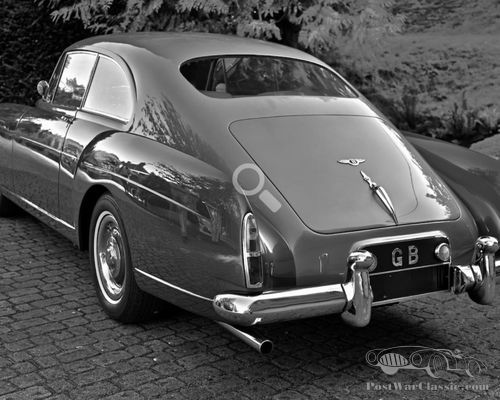
1957 Bentley S1 Fastback by H.J. Mulliner.
1957 Bentley S1 Fastback by H.J. Mulliner.A freshly restored award winning car in like new condition. A later car with Power assited steerin..