Het wereldwijde magazine en verkoopplatform voor liefhebbers van klassieke auto’s, door liefhebbers.
Het wereldwijde magazine en verkoopplatform voor liefhebbers van klassieke auto’s, door liefhebbers.





De marktplaats: alle oldtimers te koop
Overzicht van gerelateerde advertenties 1976 Alfa Romeo Sports Coupé by Autotecnica del Lario | RM Sotheby's | The Woodcote Park Auction
-

1968 Aston Martin DB6 | Bicester Heritage 23rd September 2023 Sale | Historics Auctioneers
The Aston Martin DB6 was launched at the London Motor Show in 1965, following on from the highly successful DB5, immortalised by the 1964 James Bond film 'Goldfinger'. The front of the DB6 was visually similar to the DB5 but closer inspection revealed quite a different car. The wheelbase was lengthened allowing additional passenger space in the rea.. -
1968 Triumph TR5 | Bicester Heritage 23rd September 2023 Sale | Historics Auctioneers
The TR5 was built for a 13-month period between August 1967 and September 1968 in Coventry. Visually identical to the Michelotti styled TR4, the TR5 hid the main differences under the body. The most significant change was the 2.5 litre straight-six fuel-injected engine developing around 150bhp and which was carried forward to the TR6. At the time, .. -
1965 Austin Mini Cooper S | Bicester Heritage 23rd September 2023 Sale | Historics Auctioneers
The notion that the Mini might have a future as anything other than basic transport was an anathema and the idea of a high-performance version was laughable. One man though, saw it quite differently. Racing car manufacturer John Cooper already knew quite a bit about tuning BMC's A-Series engine, he was running the company's Formula Junior effort at.. -
1960 Austin Healey 3000 Mk. I BT7 | Bicester Heritage 23rd September 2023 Sale | Historics Auctioneers
The Austin Healey 3000 Mk. I four-seater was a sports car produced between 1959 and 1961. This version of the popular sports car featured four seats, making it a practical option for families and those who wanted to enjoy the open road with friends. Under the bonnet, the Austin Healey 3000 Mk. I four-seater featured a 2.9 litre straight-six engine .. -
1968 Ford Mustang Fastback | Bicester Heritage 23rd September 2023 Sale | Historics Auctioneers
The Ford Mustang was the brainchild of Lee Iacocca and was branded as the first 'Pony Car', borne out of a need to compete with the flood of European sportscars coming into the USA in the sixties. The first production Mustang rolled off the assembly line in Dearborn, Michigan on 9th March 1964 and was introduced to the public at the New York World'.. -
1967 Triumph TR4A IRS | Bicester Heritage 23rd September 2023 Sale | Historics Auctioneers
Produced between 1961 and 1967, the Triumph TR4 combined a new, modern, and aggressive body design by famed Italian stylist, Giovanni Michelotti, with the basic chassis of the previous TR3A. The TR4 also improved passenger comfort with wind-up windows, face-level ventilation, and an optional hardtop. When equipped with the optional overdrive, the T.. -
1965 Mercedes-Benz 230 SL Pagoda | Bicester Heritage 23rd September 2023 Sale | Historics Auctioneers
The 1965 Mercedes-Benz 230 SL Pagoda is an iconic symbol of automotive elegance and sophistication. This timeless beauty, named after its distinctive concave hardtop resembling an Asian pagoda, combines form and function effortlessly. Under the bonnet, it boasts a 2.3 litre inline-six engine, delivering a blend of power and refinement. Its sleek, g.. -
1963 Triumph Spitfire Mk. I | Bicester Heritage 23rd September 2023 Sale | Historics Auctioneers
The 1963 Triumph Spitfire is a compact and charming British sports car that embodies the essence of carefree motoring. With its sleek lines and low-slung profile, it exudes a sense of timeless elegance. The Spitfire's 1.1 litre four-cylinder engine delivers modest yet engaging performance, accentuated by its lightweight construction. Its minimalist.. -
1965 Ford Mustang Fastback | Bicester Heritage 23rd September 2023 Sale | Historics Auctioneers
The Ford Mustang was the brainchild of Lee Iacocca and was branded as the first 'Pony Car', it was born out of a need to compete with the flood of European sports cars coming into the USA in the sixties. The first production Mustang rolled off the assembly line in Dearborn, Michigan on March 9th 1964 and was introduced to the public at the New York.. -
1967 Mercedes-Benz 250 SL Pagoda | Bicester Heritage 23rd September 2023 Sale | Historics Auctioneers
Mercedes-Benz has been producing an SL (Sport Leicht) model or range of models since 1954 when the landmark 300 SL was unveiled. The similarly styled, but mechanically unrelated, 190 followed in 1955, completing the first generation of cars. Their successor was the W113 series SL which proved to be more comfortable than the former and faster than t..


Uitgelicht
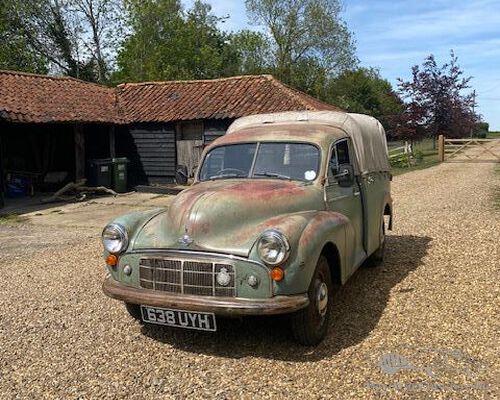
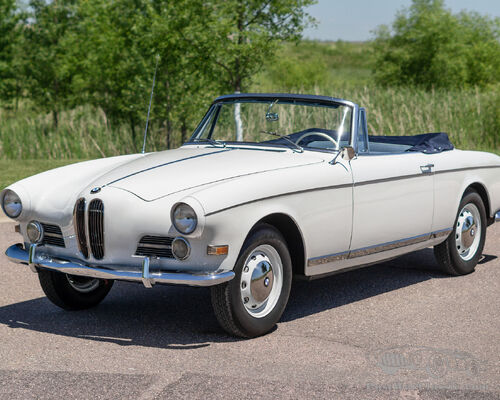
1957 BMW 503 Cabriolet (V8) – 1 van 13 gebouwd voor de Amerikaanse markt – #Matching exemplaar
1957 BMW 503 Cabriolet Serie 1Originele aluminium V8 # MatchingOriginele aluminium carrosserie met fabriekstempels1 v..
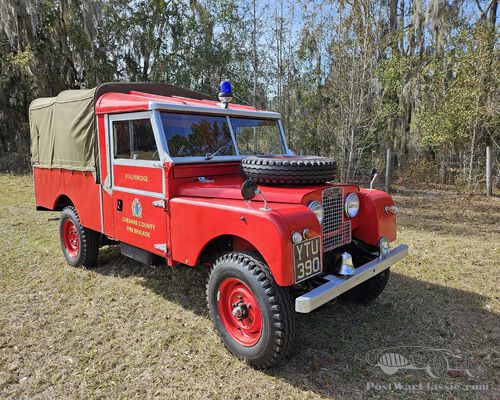
1957 Series 1 Land Rover Fire Engine + Coventry Climax Godiva Fire Pump
Betsy was used by Cheshire Fire Service (UK) from 1957 to 1975. She was based at Hazel Grove and Stalybridge Fire stations. She comes with an exten..