Het wereldwijde magazine en verkoopplatform voor liefhebbers van klassieke auto’s, door liefhebbers.
Het wereldwijde magazine en verkoopplatform voor liefhebbers van klassieke auto’s, door liefhebbers.





De marktplaats: alle oldtimers te koop
Overzicht van gerelateerde advertenties Superb VW T2 Campervan
-

1975 BMW 2002 Cabriolet | Ascot Racecourse | Historics Auctioneers | 25th September 2021
The BMW 2002 series is important in the history of BMW for several reasons; not the least of which being that it brought the company out of near bankruptcy in the 1960’s and put BMW on the map in the United States. It was the ancestral grandfather to the BMW 3 Series and was produced from 1968 to 1976. German BMW importer Max Hoffman is credited wi.. -
1972 Triumph TR6 | Ascot Racecourse | Historics Auctioneers | 25th September 2021
The Triumph TR6 was manufactured for seven years from 1969 and by the time production came to an end in July 1976, it was the best-seller of the TR range. The bodywork closely resembled that of the previous model, the Triumph TR5, but the front and rear were squared off and all TR6s featured inline six-cylinder engines. For the US market, the engin.. -
1973 Jaguar E-Type Series III 2+2 | Ascot Racecourse | Historics Auctioneers | 25th September 2021
There is no denying the legendary status that is enjoyed by the Jaguar E-Type, from its arrival on the motoring scene in 1961 until the final car was built in 1975, this sports car from Coventry had an impact that is still felt today. Even with its sportscar heritage, Jaguar depended on saloon vehicles for its survival and had developed its twelve-.. -
1979 Rolls-Royce Silver Wraith II | Ascot Racecourse | Historics Auctioneers | 25th September 2021
The Rolls-Royce marque has long been the benchmark of automobile for which many aspired to. The Silver Wraith II is an extended wheelbase version of the popular Silver Shadow II and it was named in honour of the first post-war Rolls-Royce. The Silver Wraith was further distinguished from its shorter wheelbase stablemate by the fitting of the Cornic.. -
1978 Rolls-Royce Corniche Fixedhead Coupé | Ascot Racecourse | Historics Auctioneers | 25th September 2021
The Corniche was Rolls-Royce's coupé and convertible version of the Silver Shadow produced between 1971 and 1996. The Corniche was named 'Silver Shadow Mulliner Park Ward two-door fixed head coupé' before 1971 when the Corniche name was applied. The exterior design was by John Polwhele Blatchley. The independent coach maker James Young had already .. -
1975 Triumph Stag | Ascot Racecourse | Historics Auctioneers | 25th September 2021
The ‘Stag’ name was a development codename allocated when the design project was initiated by Giovanni Michelotti in 1965. None of the subsequent names suggested through the process were ever deemed more compelling, 55 years later, the Triumph Stag still occupies one of the cornerstones of the collector’s car market. The svelte Michelotti styling m.. -
1971 Triumph TR6 | Ascot Racecourse | Historics Auctioneers | 25th September 2021
The Triumph TR6 was manufactured for seven years from 1969 and by the time production came to an end in July 1976, it was the best-seller of the TR range. The bodywork closely resembled that of the previous model, the Triumph TR5, but the front and rear were squared off and all TR6s featured inline six-cylinder engines. For the US market, the engin.. -
1972 Porsche 356 Speedster Replica | Ascot Racecourse | Historics Auctioneers | 25th September 2021
There are a number of companies who supply the kit, or a completed, 356 speedster replica but most follow the same formula. The chassis is a modified version of the original Volkswagen Beetle chassis. The original chassis is shortened and restored using new floor plans. Depending on the type of car, the chassis can feature the updated independent r.. -
1970 MG C GT | Ascot Racecourse | Historics Auctioneers | 25th September 2021
The arrival of the MGC in 1967 was greeted with mixed reaction from enthusiasts and the motoring press alike. It can be described as one of the most controversial sports cars ever produced out of Abingdon and, during its short life, the car was never short of attention, particularly from the press. The arrival of the MGC was partly due to the flagg.. -
1977 Fiat 124 Sport Spider | Ascot Racecourse | Historics Auctioneers | 25th September 2021
Introduced at the November 1966 Turin Salon, the Fiat 124 Sport Spider boasted a handsome two-door monocoque bodyshell that was not only styled but built by Pininfarina although, Fiat assumed responsibility for final assembly. It shared much of the running gear as the other 124 models, the Sport Coupé and 124 Saloon. The Spider uses a shorter platf..





Uitgelicht
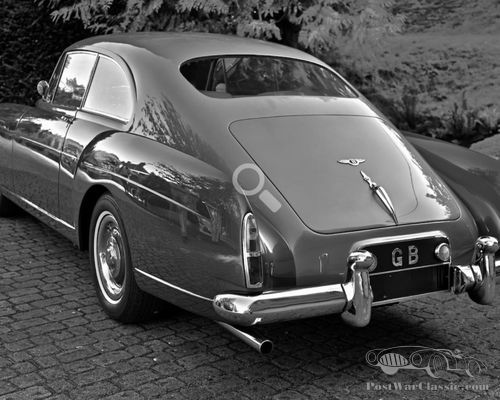
1957 Bentley S1 Fastback door H.J. Mulliner.
1957 Bentley S1 Fastback by H.J. Mulliner.Recent volledig gerestaureerd en bekroond exemplaar, in een staat die vrijwel gelijk is aan nieuw...
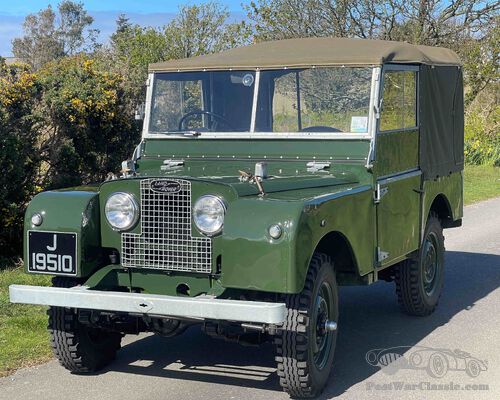
1952 Land Rover Series 1
Technische specificaties:Merk en model: Land Rover Series !Bouwjaar: 1952Kenteken: geregistreerd in ..
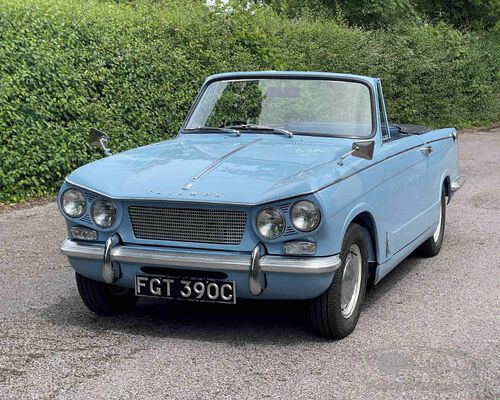
Triumph Vitesse 6 Convertible
Technische specificatiesMerk & model: Triumph Vitesse 6 ConvertibleBouwjaar: 1965Kenteken: Britse registratie