Het wereldwijde magazine en verkoopplatform voor liefhebbers van klassieke auto’s, door liefhebbers.
Het wereldwijde magazine en verkoopplatform voor liefhebbers van klassieke auto’s, door liefhebbers.





De marktplaats: alle oldtimers te koop
Overzicht van gerelateerde advertenties 1990 Ferrari F40 'Jean Sage' by Michelotto | RM Sotheby's | The Woodcote Park Auction
-

1991 Lotus Elan SE | Mercedes-Benz World | Historics Auctioneers | 27th November 2021
The Lotus M100 Elan, launched in 1989, was a two-seater, convertible sports car designed by Lotus and built with the development and testing resources of General Motors. Around £35 million was invested in its development, more than any other car in Lotus history. Its design, featuring a fibreglass composite body over a rigid steel monocoque chassis.. -
1994 Renault Alpine A610 Turbo | Mercedes-Benz World | Historics Auctioneers | 27th November 2021
Produced by Renault-owned French carmaker Alpine during the first half of the smashing 1990s (1991 to 1995), the A610 had all the attributes of a sports car... or at least the ones that were common during the day; for example, the pop-up headlights, the rear-engine and rear wheel drive layout, complete with a cool turbocharged 3.0litre V6 engine. T.. -
1980 Porsche 911 / 930 Turbo with RUF upgrades | Mercedes-Benz World | Historics Auctioneers | 27th November 2021
In the early 1970's, Porsche had designs on racing a turbocharged version of the 911 and the Porsche 911 Turbo or 930 was born. It was the fastest production car available on the market. Adding this level of power to the already powerful car created a vehicle that was not for the faint hearted. In skilled hands, however, a 930 will show a clean pai.. -
1980 Mercedes-Benz 350SL | Mercedes-Benz World | Historics Auctioneers | 27th November 2021
Introduced early in 1971, this impressive two-seater sports car replaced the 280SL. The body and chassis of the 3rd generation SL was considerably heavier and longer than its predecessor but still showed a resemblance to them. The front and rear axles were like those of the 200-250 models with independent wheel suspension using double wishbones and.. -
1997 Mercedes-Benz SL320 | Mercedes-Benz World | Historics Auctioneers | 27th November 2021
Unveiled at the March 1989 Geneva Motor Show, the new Mercedes-Benz R129 Series SL range was beautifully engineered. Based around a two-door monocoque bodyshell, its sophisticated, all-round independent suspension (double-wishbone front/five-link rear) was augmented by a host of active and passive safety features including electronic stability cont.. -
1980 Vauxhall Chevette LWB HSR Ex-Factory Works car. Group 4 specification | Mercedes-Benz World | Historics Auctioneers | 27th November 2021
In 1976, at the instigation of new chairman Bob Price, Vauxhall decided to increase their profile in international rallying. They developed a rally version of the Chevette in conjunction with Blydenstein Racing, which ran Dealer Team Vauxhall, the nearest equivalent to a 'works' (manufacturer run) competition team that GM policy would allow. In ord.. -
1986 Porsche 911 Carrera Resto-mod | Mercedes-Benz World | Historics Auctioneers | 27th November 2021
The early days of this exquisite example are slightly academic. It went from Germany to Japan (import documents enclosed) and then back to the UK. The real story begins in 2011 when it arrived with the vendor. The Porsche marque was the designer’s personal passion and with an award-winning restoration team around him they wanted to prove a point wi.. -
1990 Mercedes-Benz 190E 2.5 16V Cosworth | Mercedes-Benz World | Historics Auctioneers | 27th November 2021
In 1983, Mercedes-Benz introduced the Cosworth 2.3 16V into their range and the new cars were substantially different from the other 190 models. The body kit reduced the drag coefficient and the steering wheel was smaller than that on other 190s, whilst the fuel tank was enlarged to 70 litres. The Getrag five-speed, manual gearbox was unique to the.. -
1986 Mercedes-Benz 560 SEC AMG Widebody 6.0 Litre Quad Cam | Mercedes-Benz World | Historics Auctioneers | 27th November 2021
Prior to its merger with Daimler AG, AMG was an independent tuner that was established in 1967 by Daimler-Benz engineers Hans Werner Aufrecht and Erhard Melcher (the G is for Grossaspach, Aufrecht’s birthplace). AMG would modify engines and sell performance accessories that customers could use to upgrade their Mercedes-Benz automobiles. By the 1980.. -
1980 Ford Escort Mk. II Rally Spec (1.7 litre) | Mercedes-Benz World | Historics Auctioneers | 27th November 2021
The squarer-styled Escort Mk. II appeared in January 1975 with the first production models having rolled off the production lines on 2nd December 1974. Unlike the first Escort (which was developed by Ford of Britain), the second generation was developed jointly between the UK and Ford of Germany. Codenamed ‘Brenda’ during its development, it had th..


Uitgelicht
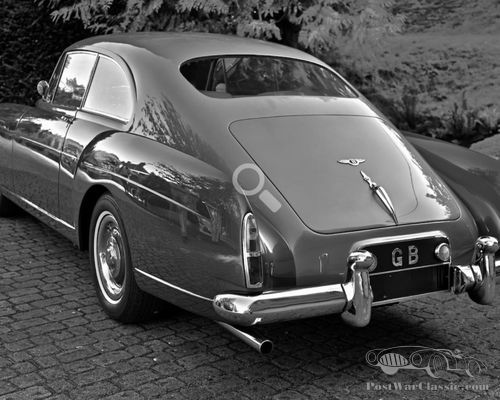
1957 Bentley S1 Fastback by H.J. Mulliner.
1957 Bentley S1 Fastback by H.J. Mulliner.A freshly restored award winning car in like new condition. A later car with Power assited steerin..
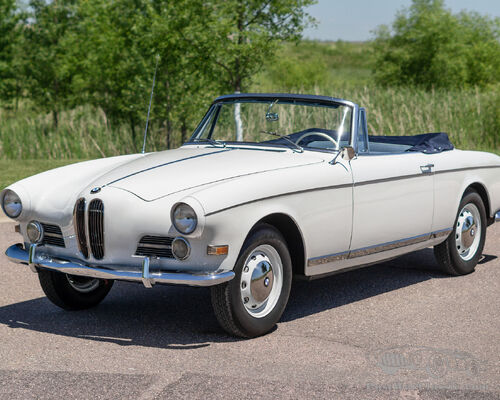
1957 BMW 503 Cabriolet (V8) – 1 van 13 gebouwd voor de Amerikaanse markt – #Matching exemplaar
1957 BMW 503 Cabriolet Serie 1Originele aluminium V8 # MatchingOriginele aluminium carrosserie met fabriekstempels1 v..
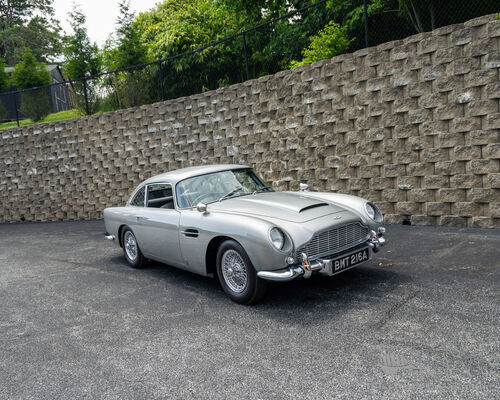
2020 Aston Martin DB5 Goldfinger Continuation | RM Sotheby's | The Monterey Auction
To Be OFFERED AT AUCTION at RM Sothebys' The Monterey Auction event, 13 - 15 August 2026. $1,000,000 - $1,500,000 USD One of 25 examples co..