Het wereldwijde magazine en verkoopplatform voor liefhebbers van klassieke auto’s, door liefhebbers.
Het wereldwijde magazine en verkoopplatform voor liefhebbers van klassieke auto’s, door liefhebbers.





De marktplaats: alle oldtimers te koop
Overzicht van gerelateerde advertenties 2024 Land Rover RANGE ROVER 4.4 V8 AUTOBIOGRAPHY
-

2001 Mercedes-Benz Smart Fortwo Brabus Cup | Mercedes-Benz World | Historics Auctioneers | 27th November 2021
It could be argued that the most famous Formula One racing car designer is Gordon Murray. He certainly was instrumental in assisting Ayrton Senna, Nelson Piquet and Alain Prost to Formula One glory and was the brains behind the McLaren F1 road car. His early years were spent designing Brabham F1 cars under Bernie Eccleston, many of which became Wor.. -
1990 Nissan 300ZX Twin Turbo | Mercedes-Benz World | Historics Auctioneers | 27th November 2021
Launched in 1989, Nissan’s Z32 300ZX was the fourth generation of the famous Z-car, a completely fresh design featuring an all aluminium 24 valve engine displacing three litres, a decent handling chassis boasting five link independent rear suspension and radical new bodywork that retained the signature Targa roof. The Z32 was packed with technology.. -
1993 Porsche 911 3.6 Speedster | Mercedes-Benz World | Historics Auctioneers | 27th November 2021
With the introduction of the 911 Speedster in January 1989, Porsche revived a charismatic model from its past, the name previously having been applied to that most stylish of the many Type 356 variants. Based on the 911 Turbo Cabriolet, though normally aspirated, the 3.2-litre Speedster was launched immediately prior to the introduction of the new .. -
1992 Alfa Romeo 75 1.8 Turbo QV | Mercedes-Benz World | Historics Auctioneers | 27th November 2021
The 75 was introduced in May 1985 to replace the Giulietta (with which it shared many components) and was named to celebrate Alfa’s 75th year of production. The body, designed by head of Alfa Romeo Centro Stile Ermanno Cressoni, was styled in a striking wedge shape, tapering at the front with square headlights and a matching grille. It also feature.. -
2003 Mercedes-Benz SL55 AMG | Mercedes-Benz World | Historics Auctioneers | 27th November 2021
The fifth generation of the legendary SL series of two-door convertible sports cars was known as the R230. It featured a fully retractable hardtop that was marketed as the Vario roof, a first for the SL Class although it had been available on the smaller SLK model since 1997. The flagship models were built by AMG in the form of the SL55 and SL65, b.. -
1991 Lotus Elan SE | Mercedes-Benz World | Historics Auctioneers | 27th November 2021
The Lotus M100 Elan, launched in 1989, was a two-seater, convertible sports car designed by Lotus and built with the development and testing resources of General Motors. Around £35 million was invested in its development, more than any other car in Lotus history. Its design, featuring a fibreglass composite body over a rigid steel monocoque chassis.. -
1994 Renault Alpine A610 Turbo | Mercedes-Benz World | Historics Auctioneers | 27th November 2021
Produced by Renault-owned French carmaker Alpine during the first half of the smashing 1990s (1991 to 1995), the A610 had all the attributes of a sports car... or at least the ones that were common during the day; for example, the pop-up headlights, the rear-engine and rear wheel drive layout, complete with a cool turbocharged 3.0litre V6 engine. T.. -
1989 BMW 635 CSi Highline | Mercedes-Benz World | Historics Auctioneers | 27th November 2021
Successor to the race proven E9 3.0CS/CSi, the BMW 6 Series was introduced in August 1976, it utilised a modified version of the 5 Series saloon platform equipped with all-round independent suspension and powerful disc brakes. A natural rival to the 928 and XJS, the four-seater 6 Series proved more capacious than the Porsche and sportier than the J.. -
1980 Porsche 911 / 930 Turbo with RUF upgrades | Mercedes-Benz World | Historics Auctioneers | 27th November 2021
In the early 1970's, Porsche had designs on racing a turbocharged version of the 911 and the Porsche 911 Turbo or 930 was born. It was the fastest production car available on the market. Adding this level of power to the already powerful car created a vehicle that was not for the faint hearted. In skilled hands, however, a 930 will show a clean pai.. -
1997 Mercedes-Benz SL320 | Mercedes-Benz World | Historics Auctioneers | 27th November 2021
Unveiled at the March 1989 Geneva Motor Show, the new Mercedes-Benz R129 Series SL range was beautifully engineered. Based around a two-door monocoque bodyshell, its sophisticated, all-round independent suspension (double-wishbone front/five-link rear) was augmented by a host of active and passive safety features including electronic stability cont..


Uitgelicht
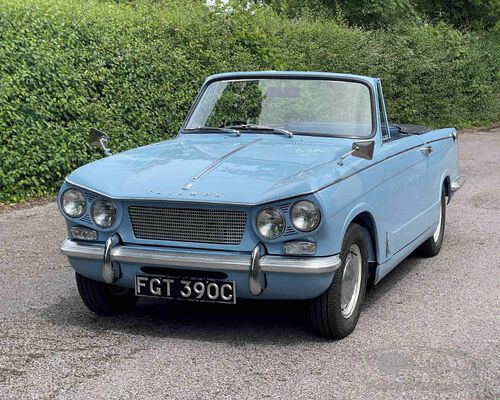
Triumph Vitesse 6 Convertible
Technische specificatiesMerk & model: Triumph Vitesse 6 ConvertibleBouwjaar: 1965Kenteken: Britse registratie
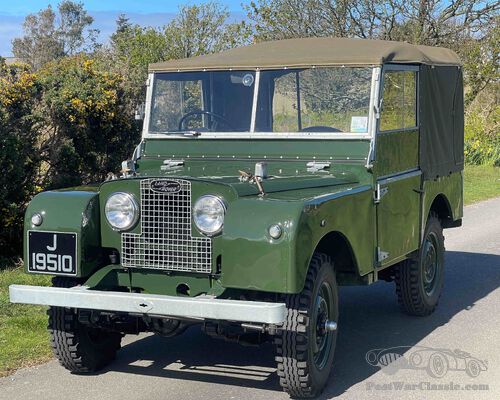
1952 Land Rover Series 1
Technische specificaties:Merk en model: Land Rover Series !Bouwjaar: 1952Kenteken: geregistreerd in ..
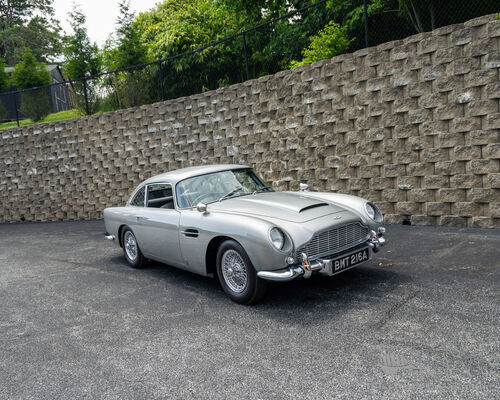
2020 Aston Martin DB5 Goldfinger Continuation
Wordt geveild door RM Sotheby's tijdens The Monterey Auction, 13–15 augustus 2026. Geschatte opbrengst: USD 1.000.000 – 1.500.000..