Het wereldwijde magazine en verkoopplatform voor liefhebbers van klassieke auto’s, door liefhebbers.
Het wereldwijde magazine en verkoopplatform voor liefhebbers van klassieke auto’s, door liefhebbers.


Filter
Maak een keuze
- Auto's
-
Merk >>
-
Bouwjaar >>
-
-
Categorie >>
- Motorfietsen
-
Bouwjaar >>
-
-
Locatie >>
- Onderdelen
-
Automerk >>
-
Fabrikant >>
-
Categorie >>
-
Landen



Moord en mysterie: wat is er gebeurd met de Emperor Special?
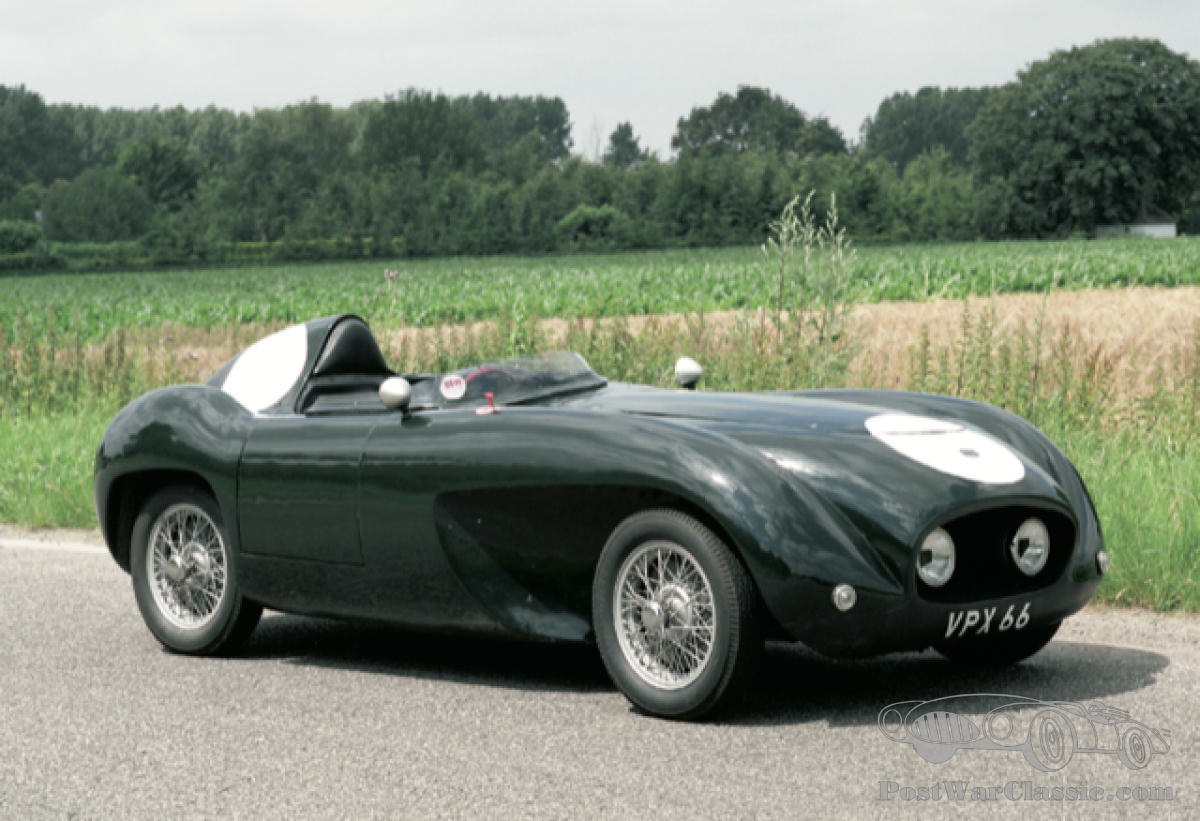
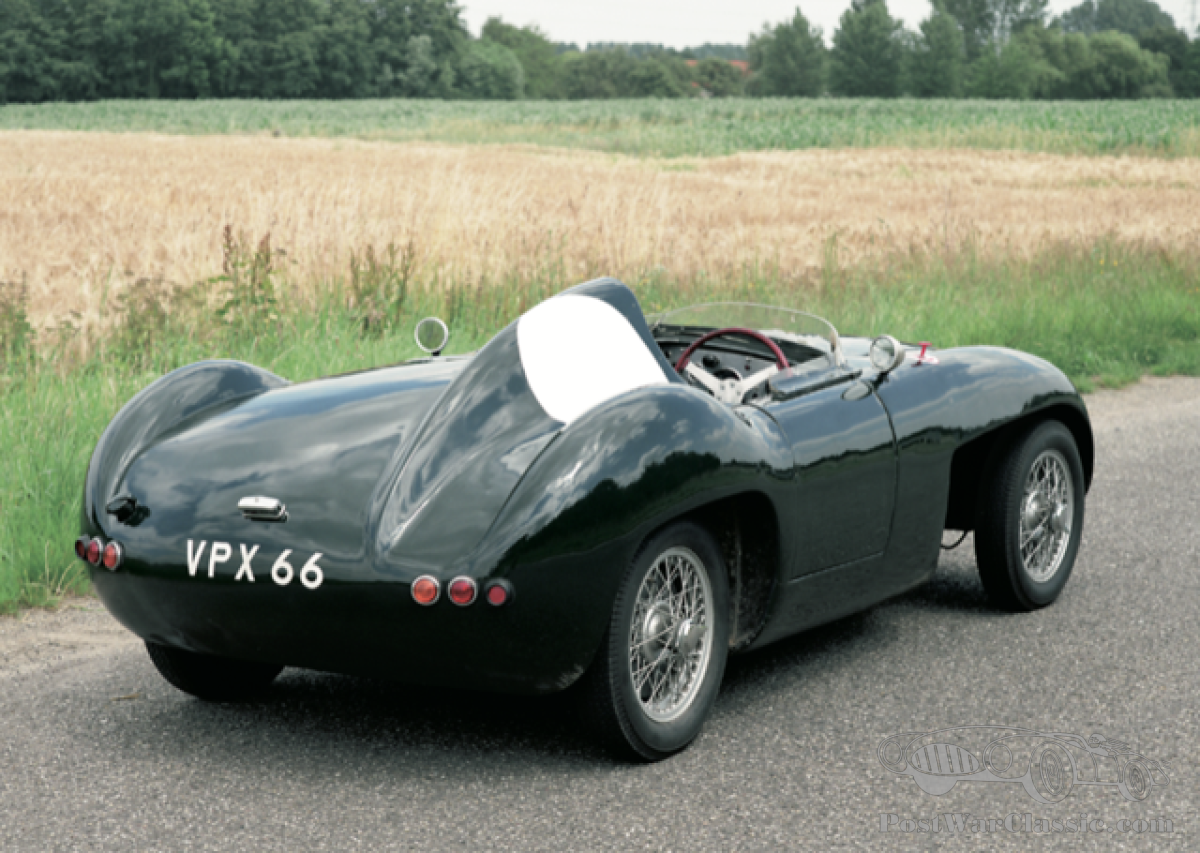


Een van de mooie dingen van een archief is dat het je altijd weer kan verrassen. Je duikt erin op zoek naar iets specifieks en stuit onderweg op iets totaal anders—irrelevant voor je oorspronkelijke zoektocht, maar minstens zo interessant. Zo kwamen we deze foto's tegen van de prachtige HRG die je hier ziet, en ze brachten ons meteen terug naar een verhaal dat we in 2018 schreven.
Er hangt een flinke dosis mysterie en intrige rond deze gestroomlijnde special, bekend als de Emperor Special, ooit geregistreerd als TPD 168. De hoofdrolspelers in dit drama? Coureur David Blakely en nachtclubhostess Ruth Ellis.
Uit ons eigen artikel:
"Ellis werd geëxecuteerd nadat ze haar verloofde Blakely op 10 april 1955 in het openbaar had doodgeschoten. Blakely was de stiefzoon van Sir Humphrey Cook, een belangrijke financier van ERA, en kwam uit een welgestelde familie. Hij had een grote passie voor sportwagens en liet een speciale racewagen bouwen rond een gloednieuwe HRG 1500 twin-cam-motor, die in straattrim naar verluidt 108 pk leverde. De auto werd gebouwd door een bevriende ingenieur van Aston Martin en had een buizenchassis met een Volkswagen-voorwielophanging, een De Dion-achteras en een volledig aluminium carrosserie die wat weg had van een Ferrari Monza. Blakely spendeerde het grootste deel van zijn (geërfde) vermogen aan de auto, tot groot ongenoegen van Ellis. Maar voor hem was het de investering waard. Bij zijn debuut tijdens de Boxing Day Meeting van Brands Hatch in 1954 eindigde hij op een verdienstelijke tweede plaats achter de Connaught-motor aangedreven Lotus Mk. VIII van John Coombs. Hij racete er daarna nog vaker mee, waarbij elke race hem steeds meer geld kostte. Zijn verloofde had er al snel genoeg van. Enkele dagen voor de Paasrace, waarvoor hij de auto had ingeschreven, stond ze buiten een pub in Hampstead op hem te wachten. Toen hij naar buiten kwam, haalde ze een Smith & Wesson uit haar handtas en vuurde zes keer. Hij overleed op de parkeerplaats."
De auto zou kort na de moord en de ophanging van Ruth Ellis zijn verkocht, zonder motor. Ellis werd destijds omschreven als "de kalmste vrouw die ooit naar de galg liep." In 1999 dook de auto opnieuw op, ditmaal met een andere motor en registratie, VPX 66.
We vroegen het ons vijf jaar geleden al af: wat is er sindsdien met de auto gebeurd? De foto's in ons archief dateren ook uit 1999, kort voor de verkoop, waarna de wagen lijkt te zijn verdwenen. Zijn er recentere sporen van opgedoken?
Tekst en archieffoto’s: Jeroen Booij
Gepubliceerd:
zondag maart 16th, 2025
Facebook
LinkedIn
Twitter
WhatsApp
Email
Copy
Reacties
William Mahany
15 Maart 2025, 13:28
The thing to remember here is that the Emperor was not, and is not considered, an HRG. It may have been called such, and even carried an HRG badge in period or now(?), but it never came from or went anywhere the HRG factory. The engine in it was owned by HRG and was their first attempt at making their own twin-cam engine. The engine was based on the long-stroke Singer-based unit used in their road cars which had a single-cam head. HRG loaned the experimental twin-cam engine to David Blakely, for trying out in his 1949 Le Mans Lightweight HRG that he had acquired from his local garage in Penn, Buckinghamshire. The engine would not fit in a standard-bodied HRG car, the wide-angle head being too wide with all its manifolds, but the Le Mans Lightweight body was ideal for it and his racing ambitions were felt a good place to test it. The garage owner bought all the 1949 Le Mans team cars circa 1950 and kept two. He then sold one to Blakely. He and Blakely then went racing with them which included some of the earliest Goodwood Nine Hour races. Blakely then fitted the twin-cam engine and, later, the same engine ended up in the Emperor. HRG probably knew this but they may not have scanctioned it! By then, they had also started developing another twin-cam engine based on the shorter-stroke Singer SM engine, no doubt using the experience from the first one. This was fitted to their own new, fully independent Twin Cam car model, with disc brakes, of which only four were made. That engine is not the same engine type as the engine in the Emperor. When Blakely was killed, HRG went down in their company Fordson van to swiftly remove the twin-cam engine from the Emperor and take it back. The engine was later sold (I have all the original correspondence on it) and it ended up in a chain-drive Frazer Nash. It was re-united with the 1949 Le Mans Lighteight in the late 1970s, where it remains to this day. I own all the original pattern-making from the long-stroke twin-cam HRG project. I have a twin-cam head, many spare parts and several experimental manifolds. I intend someday to make some more...
Lees verder
Barry Morse
15 Juli 2024, 19:28
I've just stumbled across this piece and recollect that in the very early 1960s, I saw a car for sale in Croydon, I think in the driveway of a large house in Addiscombe Road, which I was told was the Emperor Special. However, it was painted red, and I'm convinced it had twin headrests. The general appearance of the body was certainly similar to the car illustrated.
Does this ring a bell?
Lees verder
Does this ring a bell?
Nicolas Van Frausum
18 October 2023, 20:31
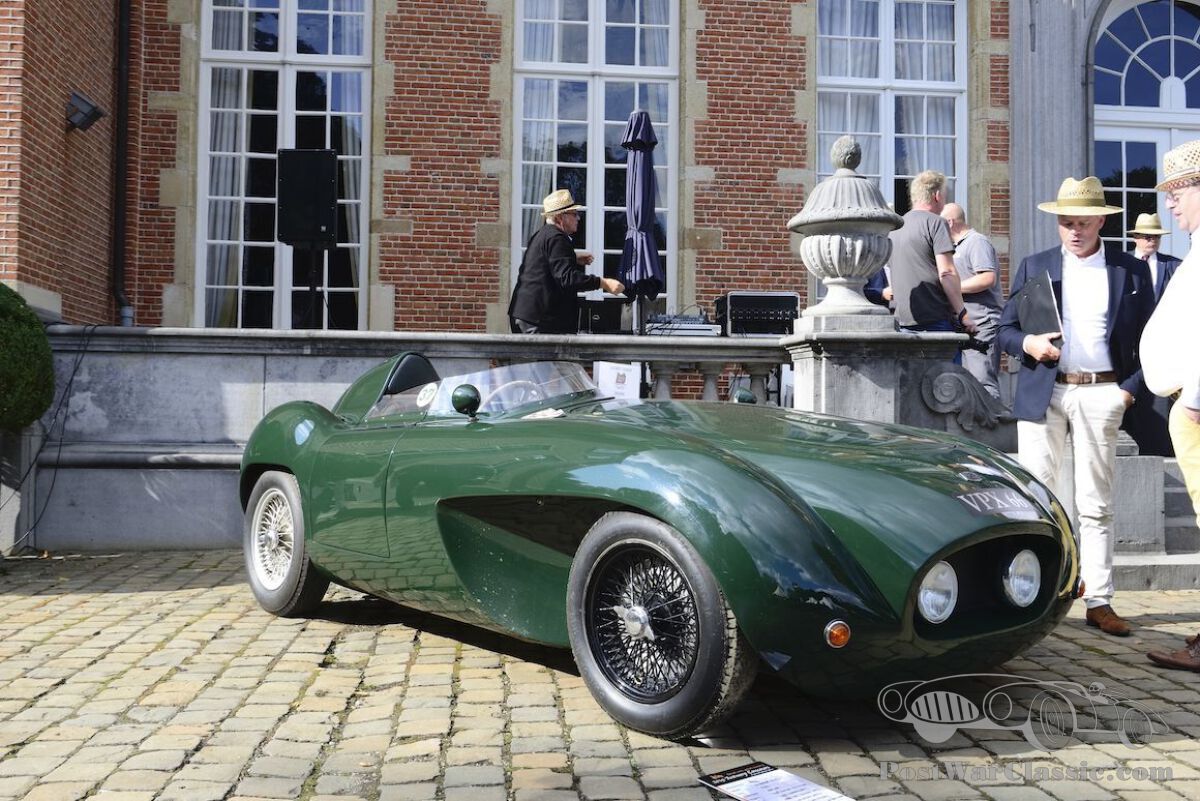
This HRG Emperor has never really disappeared from the radar and has been part of the well-known LMB Collection in Belgium for quite some time now. In recent years, the Emperor has been used in national and international rallies and in 2019 it was a competitor at the 15th Antwerp Concours (see picture attached ) the original aluminium body is hanging in the roof when entering the LMB workshop in Wommelgem near Antwerp.
Lees verder